



![]() |
||||||||||||||||||||||||||||||||||||
|
Choosing Pews for Your Sanctuary
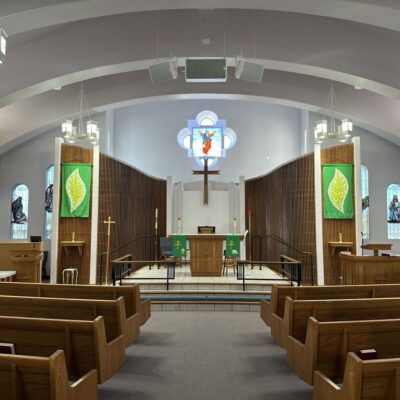
By: Bob Borcherdt In this article, my goal is to provide information that you will find helpful as you educate yourself about pews. Each segment below provides you with general information about different aspects of furniture manufacturing. 1. The Nature of Wooda. Natural Materials The complication of working with a natural material such as wood is one of the biggest challenges that furniture manufacturers must address. A tree needs water to grow, so when a tree is harvested, its wood has a moisture content of around 75 percent. This may not seem relevant, except that you must remember that wood goes through many changes after it is harvested. Heat, humidity, cold, dryness, and other climate conditions have an impact on the wood and can cause it to warp, split, or crack. Make sure you ask each company how they monitor the moisture content of the wood.
Some companies will say they buy their wood already dried. Make sure to ask them how they control the moisture in the wood while the wood is being transported to their plant. Also, find out how they monitor the moisture while the wood sits waiting to be used. b. Climate ControlAnother material-related challenge faced by a furniture manufacturer is the lack of control over the climate in which the furniture is used. In the worship market, congregations usually turn their heat or air conditioning down when the building is not in use. This can change the temperature and humidity in the building and create detrimental stress on the furniture causing it to warp or crack. As you can imagine, this type of damage can lead to disappointment. Because the manufacturer has no control over the climate in which the furniture will be used, some companies in the worship furniture market have developed products to reduce this risk. These companies will use solid wood in conjunction with engineered materials like plywood, particleboard, medium density fiberboard and veneer to reduce the risk of the furniture warping or cracking. When considering a company, it will be important for you to learn how they use solid wood and engineered materials. Certain parts of a pew should be made of solid wood, while other parts are best made of engineered materials to improve the long-term performance of the product. c. Solid Wood / Plywood / Particle Board Plywood is also considered to be a strong material because it is made by laminating layers of wood together. However, there are many different levels of plywood quality that can be used. For instance, some companies use roofing grade plywood, which typically is less expensive and contains many knots and voids. Furthermore, you will want to make sure that no pieces of the pew are joined together by screwing into the edge of a piece of plywood. Particleboard and medium density fiberboard can also be used because they are totally dimensionally stable materials and will not cause warping or cracking. However, because these materials have been misused in the past, some people are hesitant to accept them. d. Proper Use of Materials 2. Comfort a. A Good Fit b.Foam When discussing foam, furniture manufacturers use two main terms: density and indentation force deflection (IFD), also known as indentation load deflection (ILD). Density, which is the weight of a cubic foot of foam (typically measured in pounds per cubic foot), is the measurement that determines the quality of the foam. A higher density number represents a higher-quality foam that will last longer, regain its shape faster and prevent you from "bottoming out" or sitting through the foam. Most companies will use a foam with a minimum of a 1.80 lb. density. IFD, which is the amount of weight it takes to compress a 4-inch piece of foam to 3 inches, is the measurement used to determine firmness or softness. The higher the IFD, the firmer the foam. 3. Building Codes and their Effect on Seating Capacity a. Seating Space The next decision that you must consider is the amount of space you want between the back of a pew and the front of the seat right behind that pew. Building code requires a minimum of 12 inches. However, you may want to allow more room between pews to make it easier for people to move in and out of the pews. This will impact the design and size of your facility. b. Balcony SeatingIf your facility is going to have a balcony, make sure you know what the building code is in your area. Some parts of the country will require a certain back height on the balcony pews for safety reasons. Known as "highback" pews, these pews are quite a bit more expensive than standard height pews. Also, you will want to determine the amount of spacing you want between the pews in the balcony. If you know these two things early enough, the risers that the pews sit on can be designed by your architect to accommodate your desires. Ultimately, you will have several decisions to make that will give you an opportunity to customize your pews to compliment your facility: pew body style, pew end style, foam, fabric pattern and color, finish color, pew support style, pew end edge mold, and accessories, to name just a few. The bottom line is to select a company that will provide you with choices, and select a sales representative that will assist you in this process. Bob Borcherdt is the national sales manager for Sauder Manufacturing Company. This article is an excerpt from Sauder’s comprehensive Pew-Buying Guide, which is available at www.sauderworship.com. |
|
||||||||||||||||||||||||||||||||||
|
||||||||||||||||||||||||||||||||||||
|
For Christian School Products, Reviews And Resources Visit The Christian School Products Website |