





![]() |
||||||||||||||||||||||||||||||||||||
|
Youth Group Fundraising
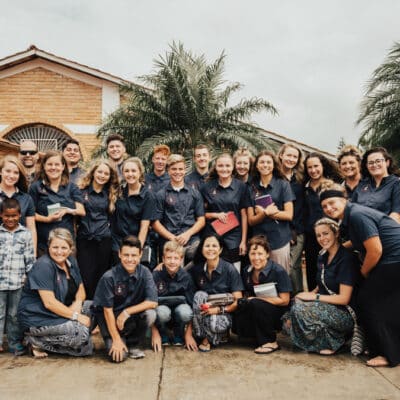
By: Bill Doyle Fundraising is often a fun activity for various clubs, groups and organizations. Not only are you able to meet and make friends for your group, but you also have the opportunity to promote your group’s goals and activities. During the process of planning, organizing and conducting the fundraising activity, many additional benefits come to the participants. The event can be a good vehicle for promoting teamwork, cooperation and leadership, in addition to building friendships, relationships and confidence. All clubs, groups and organizations undertaking a fundraising event need to realize that their donors or supporters come from two general donating groups: 1) your immediate constituency and 2) the public. Let’s talk about the “your immediate constituency” first. For church groups, they are made up of the church membership, family members of the group raising the money, and possibly a few vendors to the church. This group, “your immediate constituency,” usually lets out a loud groan when they learn you are about to take on another fundraiser project, because they know they will have to buy or donate again. Parents and grandparents accept their fate good-naturedly and do the best they can because they love you. Church members will also support your fundraising efforts for pretty much the same reasons. And finally, the vendors to the church will often contribute to their ability because they enjoy doing business with your church. The type of projects that would appeal to your immediate constituency group might include selling Bibles of a special type made available only to church members. Other activities might be a car wash, rummage sale, a youth dance or a picnic activity. There are, of course, many projects that could be used. But if you are going to rely on your immediate constituency group for your support, you need to do your homework and provide a product or activity that will appeal to them. If you don’t go to this effort, you may wind up holding an empty bag. Fundraising using the public needs to consist of a product or activity that the general public will find interesting, entertaining or cost-effective for them. I am sure you have seen many such activities. One of the ones I like involves Coke or Pepsi; one of them contributes or charges a small fee for 1,000 cases of their beverage, and your group sells them at the mall or some other very active location. Your group stacks the cases in to a fort like structure, and as the public buys them, someone from your group takes the beverages to their car. A thousand cases could bring your group $5,000, and you pay the beverage company around $2 per case. Of course, there are hundreds of other activities, such as walk-a-thons, bike and rock-a-thons, Christmas tree sales and so on that you could use, so be creative. Either donating group will be most interested if your activity is fun, creative and exciting in which to participate. Another of my favorites is a project I call “Hands-On.” The object is for the teenager that touches the car the longest wins it. Hands-On requires a new or used car, an automobile dealer’s showroom, and pledge sheets for 150 – 250 teenagers. You can require that the teenagers must get a minimum of $100, more is better, to participate. If you do not have a specified amount, you may need a second prize for the participants to compete for, such as $500 worth of gas. Other prizes of average value are useful for the person who falls off first, the tallest, shortest, and so on. The qualified participants have the prospects of being able to win the grand prize, the car. So, any reasonably late model car would serve the purpose. The car should be equally interesting to males and females. The ladies are very good at this game. NOTE: The teenagers will need to have their parents’ permission to participate in nearly any project. You will have to fill in some of the blanks, but the object is that the last “qualified” teenager with a hand on the car wins it. You will need judges, refreshments and lots of chairs and sleeping bags. The teenagers are allowed a 10-minute break each hour for the first 8 hours, 15 minutes for each hour for the second 8 hours, and 20 minutes per hour for the remainder of the competition. Motivated young people can do anything! Bill Doyle is a fundraising consultant and the author of Fund Raising Ideas: More Than 258 to Choose From. Ten Ways to Better Fundraising Results 1. Mark your calendar. Provide a complete fundraising schedule at the beginning of the year to avoid surprises. This keeps everyone aware of launch dates, deadlines for turning in orders/ money, and estimated time of delivery for products. 2. Try two-in-one approach. Get more power for your dollar by taking advantage of regularly scheduled events and be sure to display products from your current fundraising campaign to garner more sales. 3. Work on the sales pitch. Advanced preparation, before anyone begins a fundraising effort, includes writing out a sales message that focuses on your group’s specific need. It could be three simple sentences: one states the need, one presents the product, and one asks for the order. Practice it. 4. Give, and get in return. Offer family and/or parent incentives for participating, such as dinner at a local restaurant or a raffle ticket to win a weekend getaway at a nearby destination. 5. Make use of the newspaper. Promote the fundraising activity (event or product program) in the community calendar of your local newspaper. Write a press release citing the who, what, when, where and why of your program; it may be picked up by the paper to further awareness—and participation—in the program. A follow-up story on what the money was used for is in order. Also invite coverage with photo ops at the event or at the unveiling of what was funded. 6. Win with the Web. Use your Web site to announce the program, communicate your goals, thank your sponsors, recognize successes, honor individual contributors, highlight periodic or holiday offerings, and more. Promote your Web site on all your printed materials. 7. Pull out all the stops. Use all available means of increasing awareness of your group’s efforts including outdoor boards, e-mail lists, phone calling tree, newsletter, flyers, posters, bulletin boards, recorded hotline messages, etc. 8. Rely on more resources. Fundraising guru Jean C. Joachim’s book Beyond the Bake Sale: The Ultimate School Fund-Raising Book is angled at parents and schools, but it is also a good resource for churches. 9. Say “thanks” with decals and stickers. Get the word out to the community that you have a strong support base. Offer free sponsorship decals to supporting merchants and bumper stickers to volunteers and participants that say, “Proud Supporter of _____.” 10. Build ongoing relationships. Fundraising is about relationships and getting people interested and emotionally involved. You do that by telling stories about who you have helped, about the obstacles overcome, and about the successes achieved. Personal letters and newsletters sent to the community can accomplish this. Source: Association of Fund-Raising Distributors & Suppliers, www.afrds.org. Product Roundup Little Caesars Fundraising Program ABC Fundraising |
|
||||||||||||||||||||||||||||||||||
|
||||||||||||||||||||||||||||||||||||
|
For Christian School Products, Reviews And Resources Visit The Christian School Products Website |