



![]() |
||||||||||||||||||||||||||||||||||||
|
Pulpit Furnishings
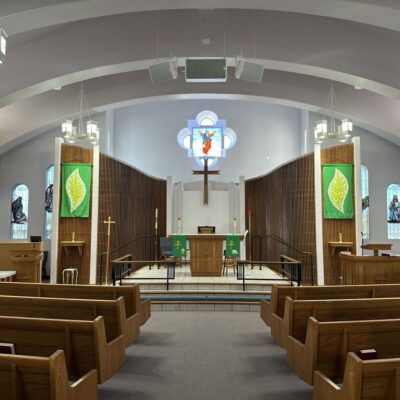
By: George R. Hoelzeman Furnishing a place of worship should reflect a sense of permanence, beauty, dignity, and, above all, sacred mystery. As elements in a community's encounter with transcendence, sacred furnishings must be capable of being touchstones in a Divine/Human interchange. Different religious traditions have different requirements for sacred furnishings. These differences reflect diverse theologies, cultures and ritual practices. Even within a single religion there can be wide variation in theology and tradition, which impacts how a worship space should be appointed. Christian liturgical traditions possess great theological sophistication and symbolic nuance. This presents the architect or designer with unique and interesting challenges. Change can be threatening, but also energizing. Design and arrangement of furnishings can have highly specific requirements, but may also present equally diverse possibilities. The key is remaining open and empathetic to the spirit of a community and how they express their faith. There are three central furnishings for liturgical churches: altar, ambo and chair. The altar is central and is considered a symbol of Christ. The altar also carries the symbolism of both community banquet table and altar of sacrifice (emphasis varies). The community gathers around the altar, and shares in bread and wine blessed and broken and celebrates the sacrifice of Christ. The altar takes “center stage” both architecturally and ritually. These principles and others suggest that the altar should be centrally located, dominant, visible by all, of substantial construction, and having a unique presence without overwhelming a space. The ambo is the place from which scripture is proclaimed. The liturgy of all the ancient Christian churches begins by proclaiming the scripture, hearing living commentary (the homily or sermon), and the response of faith (creed, prayers of intercession). All these “word” oriented activities take place at the ambo. The ambo, therefore, should reflect the dignity of what happens where it stands. The proclaimed Word is also considered a preparation for encounter with God in the Sacrament at the altar. Hence, the ambo should have some connection with the altar, either by design or placement. It should not overpower or outsize the altar, nor should it be too distant, or too close to the altar. One can approach the design of the ambo from two perspectives: It can reveal its connection to the altar through similarity of design, or it can emphasize the unique dignity of the proclaimed Word by its distinctive design. Both approaches have historical precedent. The Presider’s Chair is not simply a place to sit, but reflects a church’s ecclesiology and hierarchical structure. It is also the place from which the congregation is greeted, ritual dialogue exchanged, prayers offered, and blessings bestowed. The Presider exercises his unique role from the chair. All these things should be expressed by the design and placement of the chair. Although the chair is a sign of ecclesiastical hierarchy, it should not be throne like or excessively ostentatious. The Presider has a unique role within the liturgical assembly, but he (or she) is not a petty prince. They are a servant to the congregation of which they are a part.Hopefully, this brief overview reveals that the design and placement of sanctuary furnishing is both challenging and exceptionally rewarding to the dedicated architect, designer or artist. There is a vast literature on these furnishings and the various ancillary items required by most liturgical churches (we have not considered ambries, tabernacles, candle stands, crucifixes and a host of other items). One of the best ways of navigating this ocean of information is by making use of a liturgical consultant. Liturgical Consultants come from a variety of backgrounds ranging from architecture to pastoral service. The consultant can assist an architect, interior designer, artist and community in understanding the needs of liturgical space more clearly. A consultant can also assist with getting hierarchical approval for designs and arrangements. Any successful liturgical project requires collaboration and sensitivity to the client community. Designing for religious space is more than decorative exercise - it is a sacred art driven by the deep spiritual yearnings of humanity. If a project is to be successful, this reality must always be respected. George R. Hoelzeman is a liturgical consultant, designer and artist He is a member of the Association of Consultants for Liturgical Space (ALCS), International Center for Medieval Art (ICMA), and a Benedictine Oblate. |
|
||||||||||||||||||||||||||||||||||
|
||||||||||||||||||||||||||||||||||||
|
For Christian School Products, Reviews And Resources Visit The Christian School Products Website |