





Home About CSP In Every Issue Blog Archives Buyer's Guide Media Guide e-News Subscribe Contact
Check Out The
February 2012 Supplement


Youth Ministry: Are You Going on Mission Trips for the Wrong Reasons?
By: Doc Newcomb

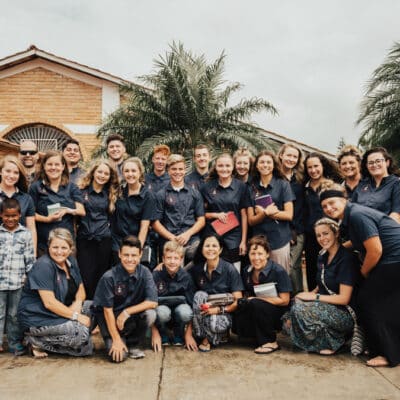
“Now I get what this Christian stuff is all about,” Maury, one of my students, said to me.  We were in a gym in Wilson, Arkansas—far from our hometown. We were tired, sore, exhausted…but exhilarated. It was Thursday night of a week-long mission trip.  My students were spread across the gym floor, reflecting on the amazing things that had happened to them. We’d spent the last several days working to repair homes: weatherizing old houses against cold winter drafts, building wheelchair ramps, adding coats of paint, and all sorts of improvements to serve poor and elderly residents in the area.
           
But all that work my teens had done? That wasn’t the best part. The best part was that look on Maury’s face when he finally “got it”…when he finally understood that God is love.

Now Maury isn’t the only student who’s said things like this—that night or over the many years of going on mission trips with youth groups.   

I’m a youth pastor. I have been for more than 16 years now. Like you, I’ve done all the things to help kids grow as disciples of Jesus: I’ve gone on retreats, taught Bible studies, taken my kids to youth rallies, organized hunger walks, led lock-ins…all the things we do with those wonderful teenagers God brings into our lives. But in all my years, I’ve learned that nothing—absolutely nothing—has the impact on students’ faith like taking them on mission trips. 

The No. 1 goal of youth mission trips is spiritual growth of the youth. You might argue with me, and you might tell me all sorts of other benefits to mission trips (and there are many), but I’ve heard it all and still hold to the opinion that spiritual growth is the No. 1 benefit of youth mission trips. In my present position, I plan youth mission trips for others. So I hear lots of reasons why youth leaders go on mission trips. They want:              
* To serve people in need
* To spread the gospel
* To build houses
* To develop a missions lifestyle in youth
* To experience different cultures
* To do justice
* To live out the Great Commission

If these are the reasons you’re taking kids on mission trips, you’re going for the wrong reason.

We’ve been called to bring students into a growing relationship with Jesus. Youth mission trips offer the unique and powerful opportunity for that to happen like nothing else we do in ministry. I’ve seen many kids experience God’s love and grace for the very first time on trips like this. It clicks. They get it. Their eyes open, and they say, “Oh, nowI know what you’ve been trying to tell me.”

At the churches I served, our annual mission trip was a youth trip first and a mission trip second. That didn’t mean the mission “work” wasn’t important…not at all! It’s because I’d seen time and time again how trips like this made faith powerfully real to my students.

Why are youth mission trips so powerful in helping kids grow closer to God?

It’s not an easy answer; in fact, there’s something miraculous in it. Over the years, I’ve seen so many students transformed at youth mission trips—transformed in ways I could never imagine: wanting to know more about the Bible, going to church more, wanting to help others more. And it’s always been hard to pinpoint the exact cause of it, but here are some things I have come up with over the years.

1. Mission trips take young people out of their comfort zones where masks drop and people become real. This puts them in a place where they have to rely on God.

2. Youth are immersed in Christian programming for an extended period of time. Day after day, they debrief their actions and apply them to the truth about Jesus.

3. There are tons of opportunities to build relationships—with one another, Christian teens from other churches, the people they serve, and with you and your adults. In my ministry, I see first-hand how relationships with other Christians help our relationship with God grow. 

4. The youth pastor and adult leaders have more access and time to spend with kids.  More access and time means more opportunities for you to counsel, nurture and love those wonderful young people.

5. Teenagers’ hearts are melted when they encounter people in need, and by reaching out to serve, they experience that special blessing from God you get by serving. (Some might say this is using people in need for our own ends. We certainly don’t want to be paternalistic and come in like we’re some great saviors or something. Any mission we do has to be respectful and appreciative of those we work with. I’m not advocating we disregard the needs of the people we serve in the name of growing closer to God. I’m saying we do both.  But for youth groups, the primary goal of doing this kind of service is spiritual growth.) Students see they’re not just serving others, but serving God  In this light, church makes more sense, and they feel a burning desire to be a part of it.  

“Yeah, yeah” you say, “but these things happen at other things we do, like ski trips or church camps.” They do indeed, and those other trips have value because of that. But mission trips have all of that all the time.  If done right, kids are reminded over and over why they’re doing what they’re doing on a mission trip. And it clicks. 

It all comes down to the Shemain the Bible. This passage in Deuteronomy 6:4-5 boiled faith in the one true God down to the most important thing: loving God with every aspect of your being: heart, soul and strength. It’s so important that to this day, Jewish people recite it every morning and every night. 

Jesus knew its importance, too. One day a lawyer came up to him and asked, “Teacher, which commandment in the law is the greatest?” (Matthew 22:36), and Jesus responded by reciting the Shema: love God with all your heart, soul and mind. But not only that, he added, “You shall love your neighbor as yourself.”

So the core of being a Christian is to love God and love our neighbor. 

And on mission trips your students get to do both. At the same time. 

Spiritual formation develops powerfully on mission trips, because you’re combining love of God with love of neighbor. Plus, you’re not just talking about it; you’re doing it.  You’re putting kids in a position to live the way God created us to live. And they thrive on it.

And you know what? When that happens, all those other reasons youth leaders go on mission trips mentioned above alsohappen. When you have students like Maury coming up to you on a mission trip with eyes newly opened saying, “Oh, that’s what this is all about,” they’re more likely to want to live out the Great Commission, to do justice, to spread the gospel, to develop a lifestyle of service, and all those other good things.  Especially with your nurturing love to guide them.
 
Mission trips work. At my organization, we get feedback from youth leaders all over the country telling us how our mission trips have helped change young people’s lives for Christ. Time after time, we hear about youth groups going back to their communities and wanting to start new Bible studies or outreach programs or local service opportunities.  And this doesn’t just happen with us.

Life-changing experiences happened to my youth every year. We’re talking about changed lives—changed by God’s love. We’re talking about kids who grew much closer to God because of a mission trip. I see it every year. And it’s the best reason there is to go on a mission trip. 
 
Doc Newcomb is a pastor, youth pastor and program manager for Group Workcamps Foundation, www.GroupWorkcamps.com, a non-profit organization that provides a variety of short-term mission opportunities for church youth groups.  This article is reprinted by permission of the author from YouthMinistry.com.


Voice Broadcasting

©Copyright 2012 Religious Product News
Religious Product News