



![]() |
||||||||||||||||||||||||||||||||||||
|
How High-Tech Can Bring About High Touch
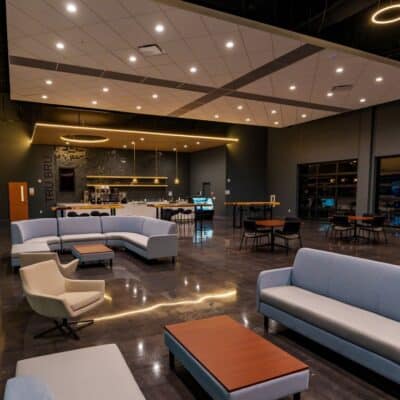
By: Bill Baumgart, Tim Ellis & Greg Carper Our kids’ culture can be defined by a single word: media. Indeed, media is such a defining element of today’s culture that kids between the ages of eight and 18 have been dubbed Generation M, or the Media Generation. Controversies abound regarding the appropriate use of media in the church. Are you looking to be relevant to an ever-changing culture with an unchanging gospel? We will unpack the new Media-Driven Model and shed some light on how these tools can best find their way into your children’s ministry. Let’s start by defining media and what it represents. Most importantly, mediameans different things to different generations. For our grandparents, it was the advent of radio. For Boomers like us, it was television. TV brought a new age of news delivery and information dissemination, but other than an occasional exuberant outburst during Monday Night Football, for us, television broadcast is a spectator sport. But we are here to talk about kids and their generation. To Generation M, media is far more than TV. For every one hour of television watched, kids today spend four hours using other media. Online gaming, music, instant messaging, blogs, Xbox, Playstation, portable handheld games and computer-based interactive games make up the collective television for this generation. The significant distinction of today’s media is that at its core, it is participatory, engaging kids in customized journeys based on their interests and skills. A new model of children’s ministry was formed to reach Generation M kids: the Media-Driven Active Engagement Model. This model uses technology and interactive media to emphasize discovery-based learning. Based on the assumptions of educational psychologists Jean Piaget, Jerome Bruner, and David Ausubel, this design takes into consideration the unique learning styles of all learners, rather than relying solely on lecture style (which appeals to only the analytic learner). Technology and media are used to communicate the gospel message in ways that engage kids and leaders, transforming them both into the spiritual champions that God intends them to be. Church analyst and futurist Leonard Sweet addresses this new paradigm and illustrates the need to become more fluid in ministering to a postmodern culture. Sweet argues that this particular turning is actually a return to the past. Multimedia is a throwback to a pre-literate culture, before the Protestant Reformation, before the invention of the printing press, when churchgoers read images—church paintings, stained glass windows, tapestries—instead of words. “Images and metaphors are so much deeper and more complex than words,” says Sweet. “It’s the most primary language—when you dream, do you dream in words? The natural language of your mind is metaphors and images.” Page after page, the scriptures confirm: God reveals Himself in multimedia. God communicates His truth through the written and spoken words of the prophets, through visual signs and wonders, through fragrant smells, through sweet tastes, and through the power of touch. God uses the pen of Moses and the mouth of Elijah. God uses the thunder and lightning on Mount Sinai and the fire on Mount Carmel. God uses the fragrance of the incense in the tabernacle and the sweetness of the manna in the wilderness. God uses the act of applying the blood of the Passover lamb to the doorposts. God speaks in many ways and especially in the person of His Son. Jesus spoke the words of eternal life, employed occasional dramatic flair, performed signs and wonders and mind-bending feats of faith, and, in the most dramatic display of all, He rose from the dead. Life with Christ was an audio-visual-kinesthetic learning adventure. Our kids have their own language complete with vocabulary and idioms, a mindset, and an ability to understand certain concepts that are particular to their culture. Churches all over the world spend countless millions of dollars every year on mission initiatives designed to translate the scriptures into languages that other cultures can understand. What are we willing to do so that our kids can have the gospel in their own language? While this method is certainly not the only way to make Christ known to kids, it is based upon the assumption that ministry, regardless of audience or culture, must take into consideration the unique distinctives of those it seeks to bring into God’s Kingdom. According to George Barna, author of the groundbreaking book, Transforming Children into Spiritual Champions, media is one of the greatest agents of influence in the lives of kids. Barna outlines a three-tiered system of influence, with the most influential factors being in the first tier and the least influential factors being in the third tier. Parents are in the first most influential tier, as are most forms of media. The second tier includes school and friends. The third or least influential tier includes church groups and extended family. Looking to the first tier of influence, it seems only wise that churches would harness the power of media to be used as a positive influence. The prevalence of media in the lives of our kids and its influence on their development isn’t going to diminish in the years ahead. If anything, it will become even more prevalent and influential. Studies conducted by the Kaiser Family Foundation measuring media use by children document the unprecedented immersion of kids in multiple electronic media. The media revolution is here! We have the opportunity to run into the battle of counterculture armed with one of the most adaptable, transferable, culturally relevant tools ever offered to the church. As Biblical Knights, we must engage Generation M on its terms. We must leverage the prevalence and influence of media so that we may capitalize on the unprecedented opportunity to reach kids with the gospel of Christ. Don’t misunderstand--this is not a treatise for TV and technology, but rather a call to reach out and inspire world changers. To be in the world, understanding and utilizing all the tools God has given through His innovative creation, to transform people into spiritual champions. The most important aspect of selecting Media-Driven content for your children’s ministry is that it be active, not passive. In fact, it should be interactive. One common misconception about this model is that kids sit passively in front of a large screen for long periods of time being “entertained” with mind-numbing frivolity. This is not what the new media-driven model is all about. It is kids talking back to the characters and being prompted by their on-screen friends to participate in community and competition. Migrating to the media-driven model also brings fear that teachers will play a diminished role. This is false and counter to the mission of the model. Often, a teacher’s ability to connect relationally with children is limited by the inordinate amount of time spent in preparation for class. Leaders invest so much time in preparation that they arrive for their ministry time more agenda-minded than relationally-minded. Utilizing media lightens the preparation demand and allows teachers to be with kids, focusing more on each child’s needs. The primary focus of children’s ministry should be relationship development, which is foundational in developing kids into spiritually mature disciples of Christ. A further advantage of this model is that recruiting teachers is often much easier than with other spiritual formation models. These programs are dynamic and fun, which translates to an exuberant and enjoyable time for everyone. Remember, kids love fun! If you can get kids to laugh with you, you can get them to learn from you. This model merges creativity and theological integrity. It is both non-traditional and Biblical at the same time. It is undeniably outside of the box, but it is most definitely inside of the Book. The media-driven approach is highly interactive; it addresses the visual, auditory, tactile and kinesthetic learning styles simultaneously. This model is meant to be supplemental. Its strength is its ability to work in tandem with other mediums. Where other models rely upon one or two devices to communicate effectively, the media-driven model utilizes all mediums, relying on the successful integration of print, memorization, interactivity, conversation, thoughtful reflection and response. So what tools are out there? You would have to be living in a cave to not be aware of or inundated with the onslaught of new media-driven tools for children’s ministry. However, it can be confusing and scary to know where to begin. Media-driven curriculum options range from solutions that are designed to be complete programs to supplemental tools that require a little more of your creativity and ingenuity in implementing. Let’s look at both scenarios. Though some programs are designed to be a total experience, many churches are using these resources in varied and unique ways. The complete program is designed to keep your prep time to a minimum, giving a solid, proven format to follow. It contains teaching, worship, interactive learning games, Bible-memory, small group directives and take-home print resources. By adding your own elements to those provided, you can customize your presentation. Some alternative approaches include supplementing the programming with your own skits, dramas, videos and live teaching. You can use a video teaching segment one week and then expound on it the following week with live discussion. Have your own worship leader or kid’s worship team lead along with the media-driven worship tools. Have Christian music videos or CDs playing when the kids arrive and during game time. Be imaginative, but remember that the relationship takes top priority. You need not become the Francis Ford Coppola of church dramas. If you are one of the privileged few that have an extensive media department, you can greatly expand your options. Create your own man-on-the-street Bible games a la Jay Leno. Rotate kid interviews with your theme and message. Use a popular clip from a family-oriented or animated film to illustrate a lesson. Identify your strongest, most dynamic communicator and create your own video teaching segments. These options are only recommended if you have vast personnel resources and budget. Every bit as important as the media tools you choose is the environment in which you use them. Kids can intuitively sense whether the environment they step into is reflective of your culture or theirs. The goal is to create an aesthetic that is inviting, engaging and screams to Generation M, “Welcome! You matter.” The good news is that the media-driven environment is very scalable to your ministry size and budget. Instead of investing in large stationary fixtures that only serve one purpose, you can create a flexible, adaptable design that allows you to change with new seasons or themes. Theming alone is worthy of a treatise. A few key elements are moving lights, media imagery, powerful dynamic sound, lighted gobos (projecting key words or Bible verses on the wall), gaming stations (like X-Box/Playstation for boys and DDR for girls), and casual seating areas that create conversation stations. One ministry we know assembled a kids’ counsel to make recommendations for room layout and design. It was a great success! Nothing communicates that kids matter more than allowing them leadership in their children’s ministry. There are countless stories of kids in the media-driven model waking their parents on Sunday and insisting that they take them to church. Is that scenario not often reversed? The key objective is to create a place that is safe, fun and reflective of their DNA. Too often, kids are made to feel like foreign visitors in an alien adult land. By embracing their aesthetic values, you gain instant credibility and you communicate that they matter. This brings about a rapid and sincere openness in their lives and hearts. Your children’s ministry is unique, and your kids are precious. Thanks to Barna, we now know that your role is the most vital in the life and growth of any healthy church. Be bold! Step out! Take risks! The rewards are well worth it, and the failures only uncover greater opportunities for success. Will the media-driven model solve all your problems? No, but harnessed appropriately, it can breathe wind in your sails and carry you to new heights of impact and effectiveness. Christ calls us to be in it not of it. So jump in the media pool and join the transformational fun. The water is just right, and your Generation M kids are already in and waiting! Bill Baumgart is president of Orbit Church. Tim Ellis is executive producer for all KIDMO & Lil’ K productions. Greg Carper is the co-pastor/co-director of Children’s Ministry at Carmel Presbyterian Church and is a speaker, lecturer and writer for KIDMO Access. |
|
||||||||||||||||||||||||||||||||||
|
||||||||||||||||||||||||||||||||||||
|
For Christian School Products, Reviews And Resources Visit The Christian School Products Website |