



![]() |
||||||||||||||||||||||||||||||||||||
|
Discovering the Value of Chairs
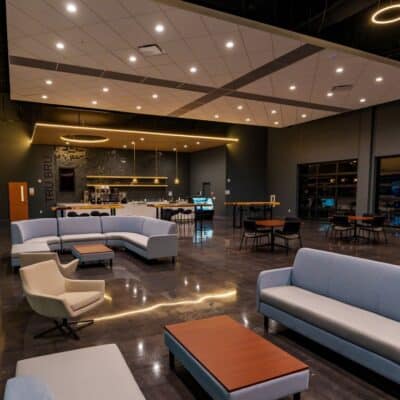
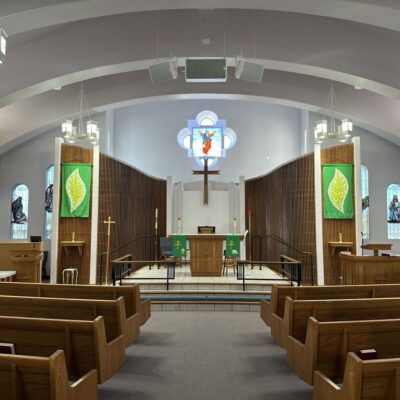
By: Jerry Ellis, A.I.A. In the conduct or worship and full use of the space for worship, a great variety of activities take place, such as communion, baptisms, weddings, funerals, receptions of members, evangelistic meetings, concerts, choir programs, dramas, dance, community meetings, audio-visuals and a host of other special services and programs. Some of these activities have both traditional and contemporary liturgies requiring different space requirements and arrangements. The variety, for example, of liturgies and arrangements for the sacrament of communion is nearly infinite. Weddings or musical programs might require a variety of arrangements. A flexible seating pattern will allow a congregation to conduct a variety of traditional or contemporary liturgical settings, which fixed seating could prohibit. Aside from accommodating different kinds of traditional arrangements, flexible seating can also have a very positive influence over the congregation's attitude. During vacation season and on low-attendance Sundays, nothing is more depressing than sitting in the back and looking across rows and rows of empty seating. With chairs, the estimated attendance can be multiplied by 120 percent, and only that number of seats can placed in the space, so that for every service during the year, the room can always look and feel well attended (about 80 percent capacity). When more than 80 percent are regularly filled, people feel hurried to get there in time for a choice seat in the rear. By the time attendance regularly reaches 85 to 90 percent of capacity, serious consideration should be given to instituting multiple services. Latecomers get the front rows, and congregations usually have a hard time growing past 80 percent of their seating capacity without multiple services or a bigger building, so that the front rows don't have to be filled every Sunday. Capacity In most states, many pew manufacturers and some architects figure pew seating capacity at 18 inches per person. Erect posture and a comfortable relationship to non-family members on both sides will find that 20 to 24 inches per person is close seating. People usually do not sit erect in pews, and it is common to find that pews designed to hold seven people seem full when occupied by five. Adding chairs to the ends of pews for overflow capacity is more conspicuous than moving chairs closer together to increase capacity and maintain aisle widths. It is also safer in case of a fire than reducing aisle widths with loose chairs. Most chairs suitable for use in churches come equipped with ganging devices that mechanically interlock rows of chairs together so that in case of fire or panic, over-turned loose chairs will not hinder safe passage down clear aisles to an exit. Maintenance Economy The major economy is not in the chair but in the room. With chairs, the sanctuary can be used more than one hour a week, in more than one way and for more than one purpose. In new buildings, chairs can free up a single-purpose sanctuary and make it into a multi-purpose space for worship and other large-group functions that would otherwise require a separate space. With chairs, a multi-purpose space can be used for worship, fellowship and Christian education. In new buildings, the use of chairs with the multi-purpose concept for space has reduced the initial cost of construction by as much as 60 percent over the typical church building plan with individual single-purpose spaces for each church program. While the cost to seat a person is roughly the same in a chair as in a pew, the use of chairs and multi-purpose space could easily mean savings for many new church building programs. The other great economical aspect of chairs is for existing buildings. By replacing existing fixed seating with chairs, an existing sanctuary can become the new fellowship hall or that much-needed extra classroom space without a major building program. Those congregations wanting to provide new programs but lacking the space in their existing building have found the nave to be an untapped resource. Vital church programs can be undertaken immediately without waiting for a building addition to be constructed. Then, program funds will not be needed to pay for a new facility. Comfort Another aspect of comfort is crowding. With chairs, each person has a fixed territory that cannot be encroached upon by trying to squeeze another person into the row. If people are crowded or uncomfortable, their attention tends to focus on how uncomfortable they are rather than on worship. Formality If all acts of worship and praise were confined to the chancel and the role of the congregation was passive, then a formalized seating pattern would be desirable. However, many liturgies in use today require involvement and participation not possible with a static space. A program with a symmetrical seating pattern is that the action or focus is somewhere in front of the seats and people in the seats are passive observers. When the seating pattern is informal or casual, the action or focus is in the arena where the seats are placed and the people seated are expected to be involved that action. While chairs interlocking in a rigid seating pattern are no less formal than rows of pews, they are capable of being informalized, and they give the space for worship the potential for adapting to and enabling any style of liturgy to be conducted. It is hoped that congregations will discover the value of chairs and experience a new freedom with an old tradition. Jerry Ellis specializes in church architecture and served as a special consultant for Church Extension, www.churchextension.org. |
|
||||||||||||||||||||||||||||||||||
|
||||||||||||||||||||||||||||||||||||
|
For Christian School Products, Reviews And Resources Visit The Christian School Products Website |