



Home About CSP In Every Issue Blog Archives Buyer's Guide Media Guide e-News Subscribe Contact
Check Out The
February 2012 Supplement


Emmanuel Baptist Church Conyers, Georgia
By: Frances Putman

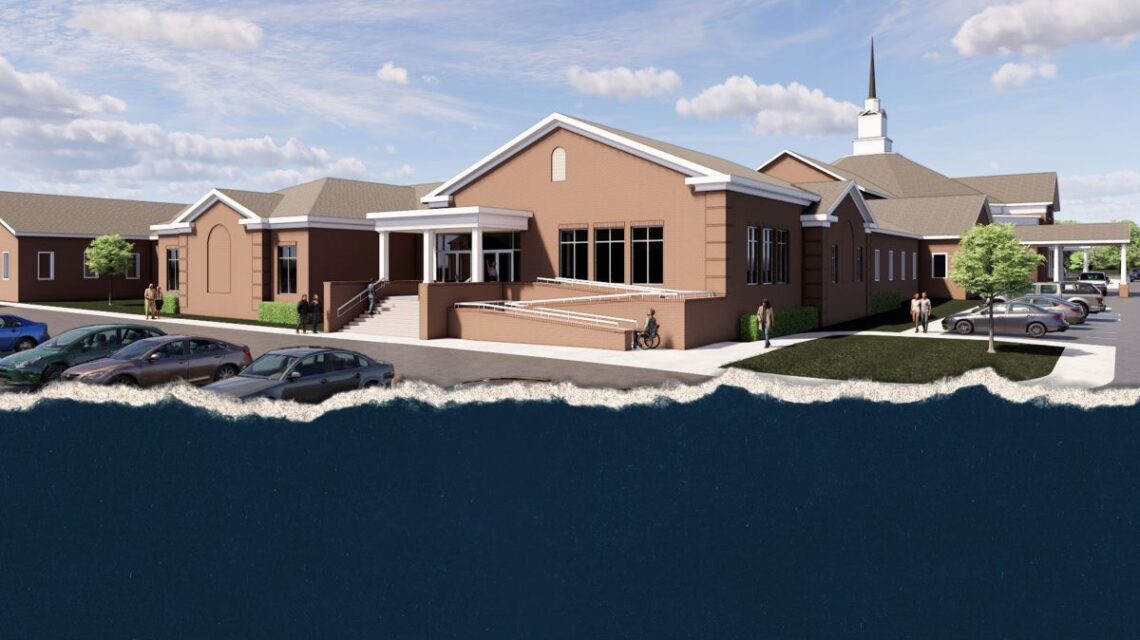
Emmanuel Baptist Church in Conyers, Georgia, was a church plant, a congregation begun in an area targeted by the Southern Baptist Convention as having need for a new church. Emmanuel started with just 20 members meeting in a small facility. As the church grew, however, more space was needed. In less than 24 months, 300 new members were added to the congregation.

First on the agenda was a multi-purpose facility that would include a sanctuary, as well as classroom, administrative and fellowship space. Also in the new facility would be restroom facilities and a small, warming kitchen. This multi-purpose space will be part of future phases, which will include a gymnasium/family life center.
  
Emmanuel's leaders turned to Church Development Services in Norfolk, Virginia, for a solution. Church Development Services works with churches in all types of building programs, but it has a standard set of "off-the-shelf" plans that churches can select.  Church leaders at Emmanuel chose plan 131-A from a catalog of pre-designed plans. The plans were then modified to meet local codes and some specific needs of the church.
  
"In our view, we (the church) saved a lot of money and time using the plans provided by (Church Development Services)," said Dr. Eric Suddith, senior pastor at Emmanuel Baptist Church. "The plans were complete, and the service was excellent."
  
In fact, in the end, the 14,400-square-foot facility was completed for around $800,000.  That came to between $50 and $55 per square foot, a rate almost unheard of, even for a church built before the sharp rises in construction costs over the past couple of years.
  
"This church had access to a very unique series of circumstances," said Glen R. Trematore, principal with Church Development Services, LLC. "Dr. Suddith, in addition to being an entrepreneur and pastor, is part of the leadership of a foundation that is dedicated to planting new churches. He is very skilled in several construction disciplines and had a team of skilled tradesmen with servants' hearts who helped deliver the building."
  
Dr. Suddith, who serves as the executive director of the Stone Mountain Baptist Association New Work Foundation, himself did much of the interior finish work on the new facility, including the installation of ceramic tile and crown molding. Other local churches sent members on work teams to help build the church. Other organizations helped in funding the project.
 
"Clarence Hall, owner of Georgia Construction Company, came in as the construction manager," noted Suddith. "He donated his time and the resources of his company in managing the project."
  
Hall, who has experience working with volunteer construction teams, successfully managed the volunteer and low-cost mission teams working on this project.
  
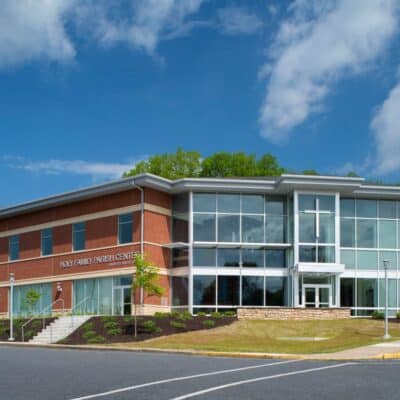
Low-maintenance brick and pre-engineered steel were chosen for the exterior of this new facility. The church was able to take advantage of the structural engineering experience of the steel manufacturer.
  
"Especially in the South, with all the storms recently, taking advantage of their expertise was a big plus," noted Trematore. "In areas like this, where there is heat and humidity, steel and brick are the materials of choice."
  
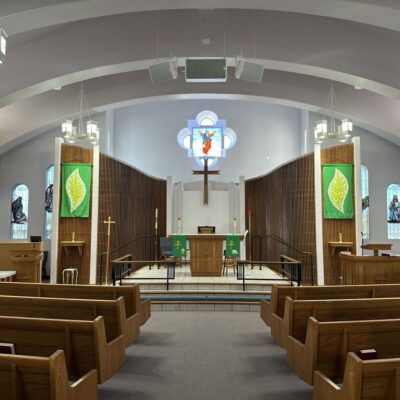
Crown molding was installed in the offices, sanctuary and main hallways. Carpeting was placed in the 400-seat sanctuary and meeting rooms. Attractive ceramic tile was installed in the foyer and hallways, as well as an elegant women's restroom.
  
Even with volunteer and low-cost labor, the project proceeded quickly and smoothly, with planning taking only a couple of months and construction less than a year.
  
"Remember, this is a building that we have designed and either built ourselves or had built several times in other locations," noted Trematore. "The advantage of using pre-designed building plans is that we learn from the last expansion project. We know what the potential issues are, and we adapt the next drawing to solve those issues. This saves time and money—money that is passed back to the church."
  
Of course, there always are adaptations that need to be made to any plans for building in a particular community. Building codes do change from time to time and differ depending on location. However, Trematore said his company's buildings are designed to meet the International Building Code (IBC) and Uniform Building Code (UBC) standards. 
  
"Most communities subscribe to IBC or UBC standards," added Trematore. "While we may have to modify to meet local and individual church requirements, this normally limits surprises."
 
Trematore said his company often notes that their most recent projects are the most successful. That comes, he said, from the experience of doing the projects time and again. 
  
"Experience pays handsome dividends," he said. "The cost to learn on the job negatively affects ministry, slows the momentum of growth, and adds unnecessary expense."
    
For churches considering a similar building project, he had several suggestions. First, if a church doesn't have the expertise of volunteers, like Emmanuel had, seek outside counsel from professionals.
 
Next, he said, "Pray, plan well and count the cost."
  
Churches, he noted, should be in contact with other churches that have recently completed successful expansion campaigns to find out what things they would change and what things they would keep the same. 
 
Perhaps, most importantly, he added, "Never underestimate what God can do."

Church Development Services, www.churchdevelopment.com, located in Norfolk, Virginia, has been serving churches for more than 20 years and has successfully completed more than 300 projects by using "off-the-shelf," custom-designed and/or "turn-key" solutions for church and church-related expansion campaigns. 

In a Nutshell

Church: Emmanuel Baptist Church
Location: Conyers, Georgia
Denomination: Southern Baptist
Project Goal: Church needed a multi-purpose building that would act as the primary worship center, as well as add classroom, administrative and fellowship space
Size: 14,400 square feet
Cost: $800,000
Construction Time: Plans completed in less than two months, and construction completed in just under one year
Challenge: As a relatively new church, Emmanuel needed to build the new facility as inexpensively as possible.
Solution: Many volunteer and low-cost, mission-oriented groups were used in the construction process. Having a set of time-tested, pre-designed plans also saved money.


Voice Broadcasting

©Copyright 2012 Religious Product News
Religious Product News