



![]() |
||||||||||||||||||||||||||||||||||||
|
Does your pulpit furniture reflect your worship style?
By: Andrew Holland Ever since people began speaking before groups of listeners, they have found ways to elevate themselves above a crowd. Places for public speakers can be as natural as a small hill or as crude as an old tree stump. Podiums have been as casual as a wooden soap box and as elaborate as a marble platform positioned high up in a sanctuary. As churches became more ornate and elaborate, so did the worship furniture inside. There are two primary pieces of chancel furniture a speaker uses: lecterns and pulpits. Pulpits are larger and traditionally placed on the left side of the church. Because the Gospel lesson is taught from the pulpit, this side is often referred to as the "gospel side." In modern Evangelical Christian churches, the minister normally preaches from the pulpit, which may be placed in the center of the platform rather than to the side. Pulpits and lecterns are often incorrectly referred to as podiums; however, a podium is the raised platform on which the speaker stands. Other churches opt for a more minimalistic look, choosing a pulpit manufactured from acrylic (also known as "Plexiglas"), or a combination of metal and acrylic. These types of products help to not distract the audience from the speaker's point and do not hide hand and body motions. This non-verbal communication can add clarity and effect to the message being delivered. Another consideration is the height of your speakers. Many church furniture manufacturers will custom-build your pulpit if the primary speaker is of a taller or shorter stature. Optional extensions or steps may also be purchased to accommodate different heights. Lecterns may be attached to a wooden stand or even be hung on the back of a pew for impromptu events and rehearsals. Many lecterns are adjustable in height; however, the standard height for most pulpits and lecterns is 42 inches at the low end of the book rest and 48 inches at the high end. When selecting a solid wood piece, look for any defects or scratches in the wood finish. Two coats of pre-catalyzed lacquer should be applied to protect the wood and give the speaker a smooth, splinter-free surface to work from. Custom logos or inscriptions can also be routed on the front of solid wood pieces to showcase a church's mission and individual taste. Solid wood furniture requires periodic maintenance to retain the wood's natural beauty. Using the appropriate furniture polish and a soft cloth will help to prevent the wood from drying out. Acrylic should be cleaned with a diluted glass cleaner and a soft cloth. Fine scratches can be removed by applying a rubbing compound in a circular motion. Metal and acrylic pieces reflect a much more contemporary style of worship, while wood pieces retain that "old-world" feel still valued by many traditional churches. Andrew Holland is with Covenant Church Furniture, www.covenantchurchfurniture.com.
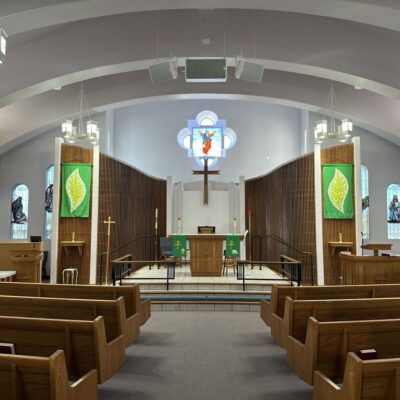
As church members enter the sanctuary, their attention is usually drawn to the platform and the pulpit that rests upon it. A pulpit is arguably the most important piece of furniture in your church; as the pastor is sharing the Word with church members, the focus is on the pulpit area. What does the pulpit represent? Is it just some material slapped together, or is it something that expresses the unique and meaningful message of the church? As times have changed, so have church furniture and sanctuary layouts. From old wooden pews, the move has been made to chairs and theater seats. Churches are now built with multipurpose rooms and child care areas. Materials have changed as well, with products such as fiberglass, composites, and recycled plastics increasingly employed in sanctuary settings. Pulpits have also undergone a modernization within the last 10 to 15 years. From large, heavy wood pieces, the transition has been made to elegant glass pulpits. Whether of standalone glass construction or in combination with wood trim and accents, these pulpits have been transforming the décor of sanctuaries worldwide. One of the most striking advantages of glass church furniture is its suitability for displaying personalized and custom artwork. Where old wood pulpits were restricted to simple art or costly carving, deep glass etching allows for customized designs of unlimited scope, from subtle and complex to bold and simple. Its ability to promote your church's unique style, message, and mission is unsurpassed. A frequent comment from pastors who have made the change to glass church furniture is that they enjoy a better connection with church members during the service. While behind their old wood pulpit, they felt as though they were hiding or that there was a barrier between them and their congregation. Many pastors have felt the need to wander away from their wooden pulpit to remind church members that they are more than a set of shoulders with a talking head placed on them. Glass church furniture has sometimes been referred to as a chameleon, as it blends in so well with its surroundings. Besides the high build quality and durability of glass, one of the reasons for its longevity is how well it suits a variety of décors. Changing carpet or paint scheme in the church? No problem. Changing the sanctuary from a traditional to modern décor? Go ahead. The pulpit will absorb its surroundings and fit in. Glass has clarity, sparkle, and elegance that is unequaled. Also, a glass pulpit is more rigid and sturdy. Finally, glass has a much longer life span both functionally and in terms of enduring beauty. What should you look for when selecting a glass pulpit? As with any purchase, make sure to find a reputable company with many years of experience working with glass. Experience goes a long way in the industry. Next, a glass thickness, of 3/8" or 10 mm is the ideal. It offers great strength and long lifespan. When providing artwork, make sure that the company has the ability and enthusiasm to work with your logo. If the company is etching the glass, you want to make sure the art you finally approve is exactly what you want. There's no eraser! If you choose a smoked glass option, make sure that the glass itself is smoked and not just a tinted film applied to it. A film tint is stretchable and may become damaged if not carefully cleaned. Make sure the pulpit rolls. Large glass pulpits weigh upwards of 500 pounds, so ask if it has recessed wheels to facilitate movement on your platform. Finally, make sure you have the ability to make it yours. Find a manufacturer that provides options like wood trim, microphones, and lights and that allows you to change elements such as height. Pastors come in all shapes and heights, and your pulpit should, too. Changing your pulpit is one of the most impactful things that you can do to update your sanctuary. Changing your pulpit provides a lasting impact at a relatively low cost. In these interesting economic times, that is what most churches are looking for. Steve Antunes is a church furniture product specialist with Prestige Glass, www.prestigepulpits.com.
Smart Cart Lectern from Hertz
|
|
||||||||||||||||||||||||||||||||||
|
||||||||||||||||||||||||||||||||||||
|
For Christian School Products, Reviews And Resources Visit The Christian School Products Website |