



![]() |
||||||||||||||||||||||||||||||||||||
|
|
Choosing the Best Flooring for Your Recreation Ministry
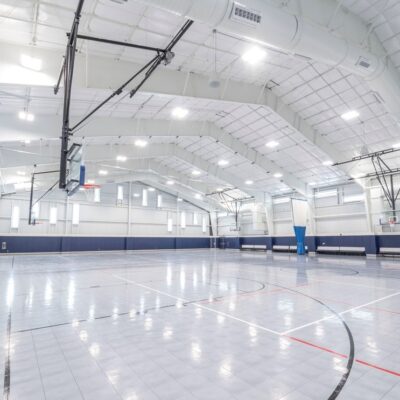
By: Chris Wedge When weighing which type of flooring is best suited for your church and its recreation needs, it is important to recognize the different attributes of each option. Here are five characteristics to always consider during the evaluation process. 1. Cost Not to be underestimated here is the life-cycle cost of these floors—the original cost of the floor considering the maintenance and cleaning costs and considering the expected life of the floor. In general, wood floors cost more initially, but they last several years longer. 2. Cleaning and Maintainability Regarding the maintenance of wood floors, new finish should be applied once per year by a certified contractor in order to keep the wood protected and the appearance in the highest state. A few synthetics can be coated with finish, and some can be repainted after a number of years. Wood floors and a few types of synthetics can be sanded to renew the appearance of the floor after several years of use. In general, wood floors are easier and cheaper to clean, while synthetics are easier and cheaper to maintain. 3. Appearance / Aesthetics Wood makes for a pretty favorable choice here, as do the vinyl, wood-grain "appearance" floors. If rubber, urethane, or sports tile are chosen, the colors of the floor and the game line striping should match and blend well with the interior of the church building. Most church facilities are looking for a subtle appearance for the sports floor within the multi-purpose building. This is in opposition to the high-profile sports high school or college facility where the goal is to make the floor a stunning visual centerpiece of pride for the community. 4. Safety / Performance Characteristics Recently, the EN Standard and the MFMA Performance Standards have also been adopted and should be considered equal criteria to DIN. Most wood floors outperform synthetic floors in the areas of shock absorbency, vertical deflection, and sliding co-efficient, while the other criteria measurements are close to equal. This makes most wood floors safer surfaces than synthetics when measuring overuse injuries and sudden twist-and-turn types of injuries. This is because wood floors are area-elastic; they achieve resiliency over a larger area in the flexion of the subfloor. Synthetics are point-elastic and have more forgiveness to smaller areas: knees, elbows, and heads. 5. Relative Importance of the Different Activities Contrast that with a floor that will host multiple, non-sports events, including food service. A synthetic floor may be the better choice here; however, the headmaster of the school is serious about his school becoming an athletic powerhouse and feels that a wood floor is the way to go for prestige, tradition, and performance. The possibilities for recreation flooring within your church are many, and, hopefully the information in this article will help guide your decision. Chris Wedge is the Southern Regional Manager for Aacer Flooring, www.aacerflooring.com. Sidebar For many centuries, no explanation was offered for the sudden collapse and instantaneous death of a patient. Even as recently as the early 19th century, it was assumed that sudden death was caused by sudden stoppage of the heart when in the diastolic phase. However, in 1889, John MacWilliam in Aberdeen, Scotland, proposed a then astonishing hypothesis, namely that the cause of sudden cardiac death was indeed ventricular fibrillation. Today, approximately 1,000 patients daily have Sudden Cardiac Arrest (SCA) caused by VF in the United States. Risk factors include family history of heart disease, heart attack or cardiac death, unexplained fainting, obesity, diabetes, and smoking. Early access to the VF victim is therefore vital, and the statistics for survival are clear.CPR and Defibrillation provided within the first minute equals 90% chance of survival; within five minutes, 30-50% survival. Encouraging action from the lay/minimally trainer bystander will save lives. We've all seen the TV shows set in hospitals where the patient's heart monitor is beeping along, and all of a sudden the nurse yells out, "Emergency, the patient is in asystole!" The doctor then rushes in and grabs the defibrillation paddles shouting, "Clear!" and delivers a shock of around 1500 Volts, hoping that he has restored saved the patient's life by restoring their circulation. The reality is that if a bystander or, in fact, a clinician is in a real-life cardiac arrest, reaction time and efficacy of CPR and Defibrillation can mean the difference between life and death to a victim. Here are three common myths associated with AEDs and CPR. Myth: AEDs are complex and difficult to use and should only be used by a trained professional. Myth: There is too much legal risk in using or owning an AED. Myth: Lay bystanders are required to perform mouth-to-mouth breathing. Today, a wide variety of AEDs are available for use in facilities. The buyer will find devices that all provide a shock if necessary, but the devices differ in other features offered. Devices offering ease of use, durability, portability, and low cost of ownership are ideal devices for use in a church or recreation ministry setting. |
|
||||||||||||||||||||||||||||||||||
|
||||||||||||||||||||||||||||||||||||
|
For Christian School Products, Reviews And Resources Visit The Christian School Products Website |