



![]() |
||||||||||||||||||||||||||||||||||||
|
Automated Lighting for Worship
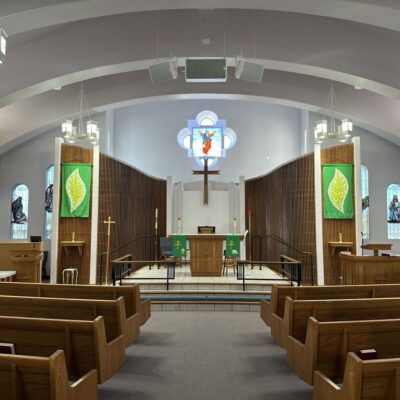
By: Donnie Brawner Movers. Smart Lights. Wiggle Lights. Rock and Roll Lights. Whatever descriptive name you choose, one thing is certain—the automated lighting fixture has made itself a standard in almost all live event situations. But, what about churches? Should something that is considered so flashy, so high-tech, so “special effect” by nature have a place in houses of worship? Here are the contributions an automated light can make to any service. Contemporary Usage In the lighting world, the moving light is a “perfect fit” of technology within the contemporary service. Color changes, iris chases, and panning light beams with gobo patterns in them are just some of the special effects backgrounds incorporated for presentations and pageants. And, we can’t stress enough how much more impact high-energy praise music has when it is enhanced visually with color and light movement. Traditional Usage When we understand that the automated lighting fixture was created as an answer to limitations surrounding “conventional” lighting fixtures, we see the following benefits. First and foremost is the issue of focusing. Not only can a light be moved from one area to another by the push of a button, but many fixtures allow you to determine the size of the beam angle, as well as whether you want a soft or hard edge on your focus…all without the use of ladders, lifts, or singed fingertips. This is very helpful when trying to get light into a hard-to-light area. Next is the duplicity capability. One moving light is capable of doing the work of multiple conventional fixtures. For example, the same automated light used to highlight a soloist in the choir can also light a pastor down front and then highlight the baptistery above the choir. Finally, but not all-inclusively, there is expanded creativity. It is no secret; studies have shown that use of light and color creates a marked impact on the viewer. Studies have also shown people are more likely to recall what they hear when it is paired with a visual (as opposed to hearing only). Automated lights can be used to design such visuals, thereby creating an impactful message. Color mixing can be used to consistently create, recreate, and change any color in the spectrum. Gobo patterns are helpful for soft video backgrounds or isolating a focus area. And, the new automated LED fixtures offer efficient lighting, low heat generation, lower maintenance costs, and lower installation costs, which is a whole separate article in itself. The most important point of any worship service is the message. How the message is presented depends on the preferences of the church. While contemporary messages allow for greater uses of the moving light’s visual capabilities, the key to lighting a traditional service is “respect.” Choose your looks wisely based on the message. Use fewer looks throughout the service. Lengthen fade times between transitions. Use the theory that less is more. Then add a heaping dose of subtly. Both styles of worship can take advantage of automated lighting for its remote focusing options, its ability to do the work of multiple stationary fixtures, and its fingertip lighting creativity to help deliver high-impact messages. Donnie Brawner is the president of Brawner & Associates, LLC, a live event production and auditorium design firm. Nationwide clients include churches, academic spaces, Fortune 500 companies, and amusement parks. Visit www.Brawnerassociates.com or e-mail at dbrawner@brawnerassociates.com for more information. |
|
||||||||||||||||||||||||||||||||||
|
||||||||||||||||||||||||||||||||||||
|
For Christian School Products, Reviews And Resources Visit The Christian School Products Website |