

When you think about communication in your church, you may picture the bulletin, pulpit announcements, or perhaps text messages sent to members. But what about those moments when an urgent message must reach everyone in your building immediately—from the sanctuary to the nursery to the fellowship hall?
That’s where visual alert systems come in. These are digital displays or monitors connected to a mass notification platform that can broadcast emergency and everyday messages across your campus. They can be as simple as the TVs already hanging in your hallways or as advanced as dedicated digital signage networks.
If your church is considering how to strengthen safety and communication, here are some practical insights to guide your decision-making.
- Why Audio Alone Isn’t Enough to Strengthen Resiliency
Churches have long relied on PA systems, intercoms, or even just word-of-mouth during emergencies. The problem? Sound can be drowned out. Music, childcare noise, or even poor acoustics may prevent people from hearing what’s being said.
Visual alerts back up sound with on-screen clarity. They also serve members who are deaf or hard of hearing — ensuring inclusivity and compliance with ADA recommendations. Imagine a packed worship service with the choir singing at full volume. On-screen messages provide immediate clarity that spoken words might not.
In an emergency, having a visual layer of redundancy ensures that if one channel fails (like sound or text), the message still reaches people through another, reliable medium. Layering communication methods helps strengthen resiliency.
- Visual Alerts Can Save Lives in Emergencies
Consider how your congregation might respond in a tornado, fire, or lockdown scenario. While a familiar fire alarm or tornado siren communicates urgency, there are other emergency situations where there is no known siren. Ultimately, people need instructions.
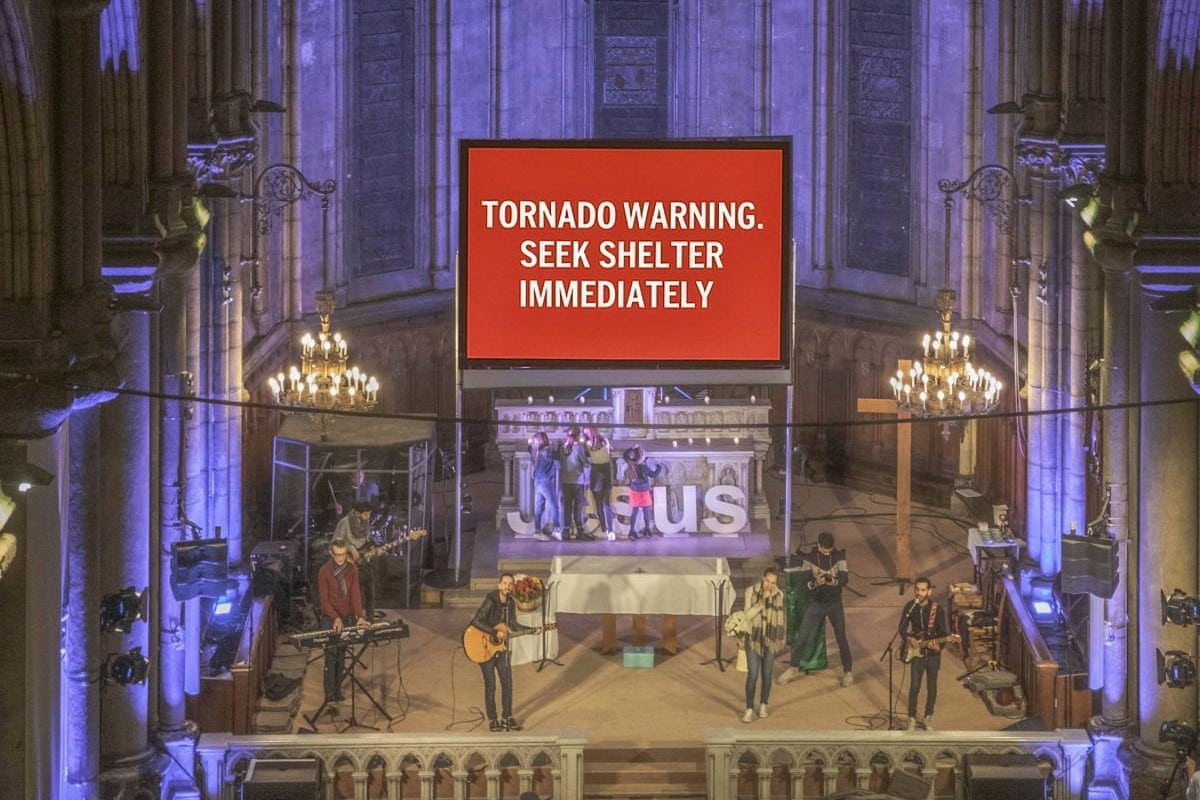
With a comprehensive visual alert system, every screen, projectors and TV across the campus can instantly display messages like:
- “Shelter in the basement now.”
- “Lock doors immediately.”
- “Fire in the kitchen — use the east exit.”
Clear, immediate instructions prevent confusion and reduce panic. For churches in tornado-prone regions or those that host large concerts and community events, the ability to give clear, step-by-step guidance on screens is invaluable.
- Childcare and Education Spaces Need Extra Clarity
If your church operates a preschool, daycare, or hosts after-school programs, you already know how complex safety can be. Visual alerts are particularly helpful here:
- Teachers can see lockdown instructions without checking phones.
- Pickup changes or bus schedules can be displayed for staff and parents.
- Severe weather instructions can be broadcast instantly across multiple rooms.
For parents, knowing the church has invested in these safeguards builds confidence. It also makes the church’s childcare ministry more attractive to families who prioritize safety alongside spiritual growth.
- Everyday Communication Benefits, Too
Visual alerts are not only for emergencies. They can also simplify daily communication:
- Announce upcoming youth events.
- Share schedules for Bible studies or prayer groups.
- Display reminders about service times or volunteer opportunities.
Screens that normally show announcements can instantly switch into emergency mode when needed, making them multipurpose tools. For example, a fellowship hall monitor might cycle through event information during the week but switch to “Severe Weather — Seek Shelter” during a Sunday storm.
- Cost, Compliance, and Insurance Considerations
Church budgets are always under pressure, but safety investments often carry hidden benefits. Many insurers reduce liability premiums for organizations with robust safety systems in place.
Additionally, while most churches aren’t required by law to have mass notification systems, ADA accessibility standards and broader safety regulations are moving in that direction. Schools are already mandated in many states to implement panic buttons and visual alerts. Faith-based institutions that serve children or host large community gatherings can expect increasing expectations in the years ahead.
A quick audit can reveal underutilized screens that could be put to good use in an affordable way. Being proactive now positions churches ahead of the curve and demonstrates wise stewardship of resources.
- Choose Scalable, Flexible Solutions
Not every church needs a complex system right away. Start small by connecting existing HDMI-enabled displays or adding a few digital signage screens in key areas. From there, the system can scale as your needs grow.
Look for platforms that integrate easily with other safety systems, such as mobile alerts or PA systems, to create a comprehensive communication strategy over time. Cloud-based management is also an important consideration to deliver consistent notifications or zoned-alerts when appropriate. Churches with multiple buildings or campuses should prioritize systems that can expand seamlessly as ministries grow.
- Training and Drills Make the Difference
Even the most advanced technology is only effective if people know how to use it. Churches should establish clear protocols for who can trigger an alert, what pre-scripted messages will be displayed, and how staff or volunteers should respond.
Regular drills, just like fire drills in schools, help reduce hesitation and confusion during real emergencies. A youth pastor might practice initiating a lockdown alert during a training session, while ushers learn to guide congregants calmly to safe zones. These rehearsals build confidence and ensure that the congregation sees the system as trustworthy and reliable.
Visual alerts are powerful, but pairing them with well-trained people makes the difference between a good plan and a life-saving plan.
Churches thrive on community, connection, and care. Visual alert systems may sound like technical infrastructure, but they are, in fact, ministry tools that protect people, honor inclusivity, and streamline communication.
By planning now, investing in scalable systems, training your teams, and integrating visual alerts into everyday ministry, you can ensure your congregation is safe, informed, and confident that their leaders are ready for whatever tomorrow brings.
David Anderson is founder and chief executive officer of Mimo, a leading provider of small displays, tablets and award-winning AV solutions, www.mimomonitors.com.