
Today’s churches have more options than ever when it comes to the design, style, and type of baptistries available. Whether building new, renovating an existing worship space, or seeking a portable solution, choosing the right baptistry involves practical, financial, operational, and pastoral considerations. Thoughtful planning helps ensure the baptistry serves the congregation safely, beautifully, and reliably for years to come.
Types of Commercially Available Baptistries
Masonry or Site-Built Baptistries
Masonry baptistries are constructed on location and offer permanence and design flexibility, but at a higher cost. These installations typically require professional design, extensive planning, and significant site work. Masonry baptistries:
- Are usually the most expensive option
- Require more complex long-term maintenance and water quality monitoring
- Are the most difficult to replace or modify in the future
- Usually larger than fiberglass models so they will have higher water and energy usage requirements.
Fiberglass Baptistries
Fiberglass baptistries are the most common choice for churches today and for good reasons. They are:
- Durable, often lasting 15 to 50+ years depending on care and use
- Easier installation than site built baptistries
- Cost-effective compared to masonry or site-built options
- Available in a wide range of shapes, sizes, and colors
Other Baptistry Options
Temporary plastic pools, metal troughs, and collapsible baptistries with vinyl membranes are also available. These options are often chosen when budgets or storage space is very limited, or for outdoor or mobile worship settings. While less expensive initially, these baptistries often require more setup time or may be more prone to wear or damage with repeated assembly/dis-assembly.
Takeaway: For most churches, fiberglass baptistries provide the best balance of cost, durability, aesthetics, and long-term practicality.
Fiberglass Baptistry Configurations
Portable Fiberglass Baptistries
Portable fiberglass baptistries are ideal for churches that have limited worship space or are using temporary facilities, looking for alternate options or need flexibility with usage or storage.
Basic portable models feature a fiberglass shell supported by a wooden frame and are well suited for temporary locations or “church on the go” ministries. The exterior can be finished to match existing décor using skirting, decorative panels, faux stone or brick, or vinyl banners with religious imagery.
Some churches choose to place a portable baptistry inside a larger existing built in baptistry instead of undergoing construction/demolition to replace an older model that has reached the end of its service life.
Cabinet-style portable baptistries incorporate wooden cabinetry and can blend seamlessly with existing church furniture. These models are sometimes designed to double as communion tables or narthex tables when not in use.
Tip: Adding a wheel kit significantly improves ease of movement and setup. Check with the manufacturer or dealer but generally if the unit has a metal frame on the bottom it is okay to baptize while on the wheels. If the wheels are attached directly to the wooden frame, then it is usually best practice to place the unit on the floor or some type of support such as wooden chocks or post before using it.
Built-In Fiberglass Baptistries
Built-in fiberglass baptistries are the traditional choice for permanent church installations. These units are framed in place using wood or metal framing and are commonly rectangular or square in shape, with multiple size options available.
Planning Tip: Fiberglass models typically require wood or metal framing support and are designed for built-in installations.
Entry Configurations
- Single-entry baptistries: Candidates enter and exit from the same set of steps. These models are typically narrower, smaller, and less expensive.
- Double-entry baptistries: Separate entry and exit steps allow access to different changing areas. These units require more space than single stair models but allow for separate men’s and women’s changing areas or for entry staging on one side and exit staging where wet clothing and dripping candidates can be accommodated more easily on one side vs the other.
Tip: Match stair placement to the location of changing rooms for efficient and safe entry and exit.
Dry Minister Baptistries
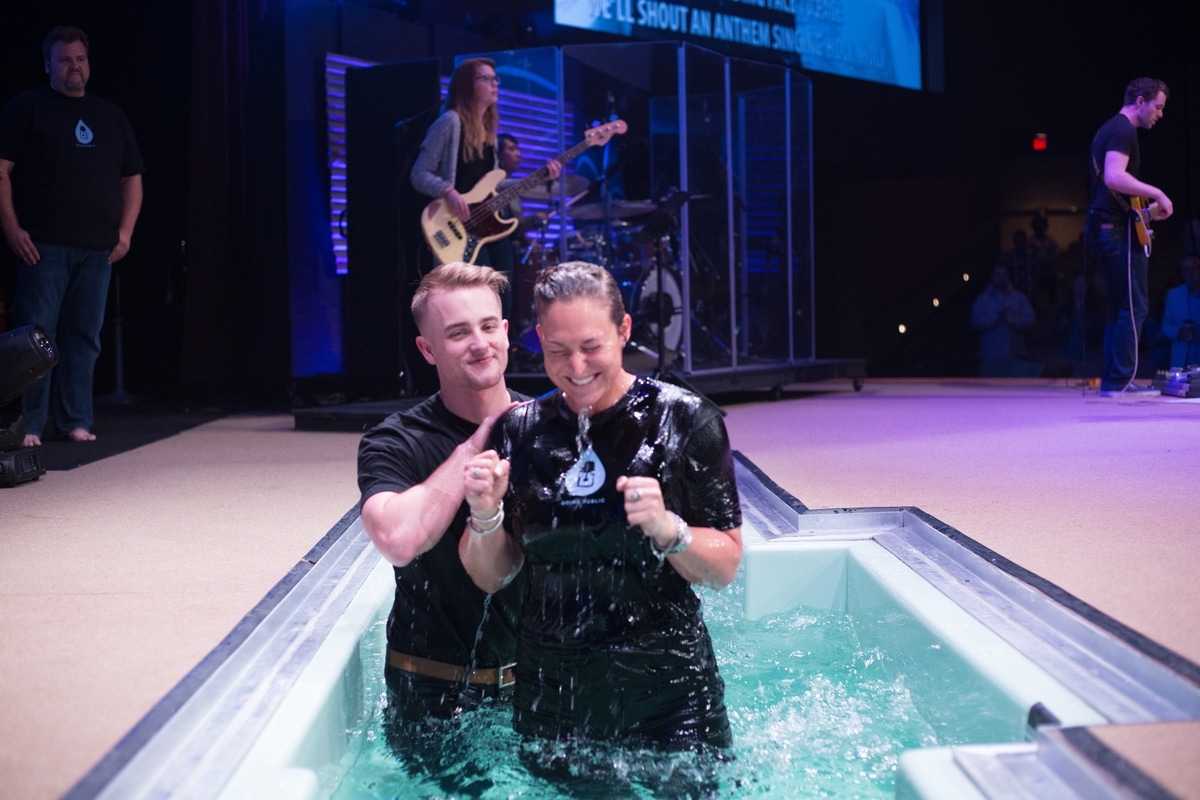
Dry minister baptistries allow the pastor to remain outside the water, enabling a quick return to the service without changing clothes. These units are narrower than full-size baptistries and may include a cutout that allows the minister to lean into the pool.
Tip: Models with a built-in candidate seat improve comfort and stability and make it easier for the pastor to handle the candidate.
Large or Group Baptistries
Large baptistries can accommodate family baptisms, group services, or multiple ministers. These units often include multiple entry points or custom stair configurations. While allowing for more people at a time, larger units also have greater water, heating and maintenance requirements.
Tip: Unusual stair layouts can significantly increase shipping costs and should be reviewed carefully before ordering. If placing these in an existing building, make sure the church doors can accommodate moving the unit inside the church.
Round Baptistries
Round baptistries are often chosen for architectural impact. They are typically larger than standard rectangular models and are frequently used as a focal point within the worship space. When using round baptistries churches frequently are leaving water in the unit 24/7 so be sure to get a model with premium gel coat finish and check with your manufacturer or dealer for operational and maintenance considerations.
Custom Baptistries
Custom fiberglass baptistries are possible but generally involve higher costs and longer lead times. During busy manufacturing times custom models might not be an option. In most cases, churches should opt for standard-size offerings which provide a faster, more economical solution without sacrificing functionality.
Optional Items and Accessories
Visibility and Accessibility
- Plexiglass windows improve visibility for the congregation, particularly for elevated baptistries
- Child step and adult seat combinations provide additional support and safety for the candidate
Baptistry Heaters
Baptistry heaters greatly enhance comfort, but require careful planning and evaluation of electrical service and plumbing.
Key considerations include:
- Matching heater capacity (wattage, voltage, and amperage) to pool size and available electrical service
- 120V heaters are generally suitable only for small portable baptistries
- 240V heaters are recommended for baptistries over 150 gallons
Tip: Before ordering, have an electrician verify available electrical capacity and a plumber confirm installation requirements.
Circulation heaters provide the most consistent and even heating, but require installation by a knowledgeable plumber or electrician (or both) and also require operational knowledge and routine maintenance. Drop-in immersion heaters can be a cost-effective alternative to circulation heaters. Make sure to match the voltage and wattage to the size of your pool. A 120v immersion heater is not going to make any significant difference to the water temperature of a 500+ gallon baptistry.
Operational Tip: Assign a trained staff member or volunteer to manage heater operation and maintenance.
Additional Accessories
- Auto fill and drain systems for one-touch operation
- Foam-insulated covers to reduce heat loss and condensation
- Handrails and drip landings to improve safety
- Decorative mural imagery to enhance the worship experience
Operational Considerations
Filling and Draining
Unless manufactured with enhanced gel coatings, most baptistries should be drained within two to three days of use. Filling the baptistry shortly before use helps prevent water fouling and surface damage.
Even with premium finishes, leaving water in the baptistry for more than 30 days can damage the finish. Draining, drying, and waxing with a fiberglass wax between uses prolongs the life of the baptistry.
Water Sanitation
When water remains in the baptistry for extended periods, sanitation is required. Options include chlorine, mineral cartridges, ozone, or UV systems.
- Circulation heaters help reduce water stagnation
- Spa-type floating mineral cartridges can reduce sanitizer requirements
- Chlorine may damage some fiberglass finishes or heating equipment. Check with your baptistry or equipment manufacturer or dealer before using chlorine. If chlorine is used it is generally recommended to keep levels under.5 ppm and augment with a mineral type cartridge. Water should be checked regularly with a pool type testing kit.
Maintaining proper ph, hardness, alkalinity, stabilizer and sanitizer help prevent damage to finish, reduces chemical demand and extends equipment life. Additionally, water should be tested for metals, especially if on a well system as metals can cause surface staining.
Safety Considerations
Drowning is the leading cause of death for children ages one to four. Baptistries should be treated with the same safety considerations as swimming pools.
- Restrict access to baptistries using locks, secure covers, and self-closing doors
- Use pool alarms as secondary protection
- Do not assume that low barriers provide adequate protection. Children can climb over shorter walls or gates.
- Never rely solely on adult supervision; distractions happen quickly when there are other people present.
Additional safety considerations include:
- Using trained helpers to assist candidates during entry and exit
- Installing handrails on both built-in and portable baptistries
- Providing non-slip mats and drip pans at exit points
Maintenance and Care
Standard gel-coat finishes can stain or degrade if water is left standing for extended periods. Always drain your baptistry within 3 days of filling unless you have surface designed for extended periods of water contact. Regular waxing with a quality fiberglass wax and consistent drain-and-clean cycles help protect surfaces. Always follow manufacturer guidelines for cleaning and drying.
Other Practical Considerations
- Measure doors, hallways, and entry points before ordering
- Confirm ceiling clearance for raised or portable units
- Ensure adequate structural support for full-size installations
- Use floor tape to visualize footprint before final selection
- Plan for appropriate changing room access
- Provide convenient access to heating equipment for service and resets
Selecting the right baptistry requires balancing tradition with practicality, beauty with safety, and stewardship with long-term care. By carefully evaluating baptistry types, sizes, features, and installation requirements, churches can make informed decisions that support meaningful worship experiences and serve their congregations faithfully for many years.
Explore Baptistries
- View fiberglass baptistries
- Explore portable baptistry options
- Learn more about baptistry heaters and accessories
- Contact ChurchProducts.com for planning guidance
Wayne Hopper is the president of Southeast Church Supply, Inc./ChurchProducts.com, one of the largest suppliers of church baptistries, baptistry heaters and steeples in the country. The team at ChurchProducts.com specializes in helping churches of all denominations select baptistries, steeples, church furniture and furnishings.