
How Legacy Givers Shape the Church’s Future
After three decades of guiding more than 1,200 churches through capital campaigns, I’ve watched an unfortunate narrative sometimes take hold in church leadership circles: that older and younger generations are somehow at odds over vision and giving.
The reality I’ve witnessed tells a different story—one where legacy givers don’t just fund campaigns, they champion the next generation and model what a lifetime of walking in faith actually looks like.
Understanding this dynamic is essential for any church preparing to cast vision for a building project, renovation, or major initiative. But before we talk about strategy, we need to talk about purpose.
It’s Never About the Building
The core of any capital campaign isn’t brick and mortar—it’s faith. We’re inviting people to learn and exercise faith in their giving, to trust God, and to participate in what He wants to accomplish through their local church and community.
Buildings are simply the facilities we put in place to have effective ministries where everybody lives. The real question isn’t “What are we building?” but “What do we want to accomplish to help people and change their story, with God helping us all to live out our lives?”
When church leaders ground their campaign in this understanding, everything changes. You’re not asking people to fund a construction project. You’re inviting them into a faith journey that includes new or improved facilities.
Where the Capacity Lives
Let’s be honest about the practical realities. In most congregations, the members with the most significant financial capacity to give are 50 and older. These legacy givers have accumulated resources over decades of faithful stewardship. They’ve paid off mortgages, established careers, and reached a season of life where significant generosity is possible.
This isn’t a problem to solve—it’s a reality to honor.
These members don’t give reluctantly or out of obligation. They give because they’ve spent a lifetime watching God prove faithful. They extended their faith when they were younger, often when finances were tight and giving felt uncomfortable.
And here they are, decades later, still moving their church forward with a fresh vision. Their very presence testifies: this works. Trusting God with your resources works.
That’s why legacy givers want to see impact. They want to know exactly what their dollars will build, who it will serve, and how it will facilitate the life change they’ve witnessed over the years. When you can show them—not just tell them—what their investment creates, they respond with confidence and generosity.
The Complete Body
Scripture describes the church as a body with many parts, and a healthy capital campaign reflects that reality. Young and old, singles and families, new believers and longtime pillars—everyone has a role to play.
This is where mentoring becomes essential. Legacy members don’t just write checks; they demonstrate what faithful generosity looks like across a lifetime. Younger members don’t just receive; they step out in faith, often stretching beyond what feels financially comfortable, learning to trust God above and beyond their immediate needs.
When these generations engage together in a campaign, something powerful happens. The younger watch the older and think, “They’ve been doing this for decades, and look at how God has used them.” The older watches the younger step out and remembers when they were in that same season of stretching faith. The body builds itself up.
The Power of Life Change Stories
One of the most effective tools for unifying generations around vision is the life change interview. When church members share their stories about what the church has meant to them over the years, how they came to faith, how they grew, and how they found community and purpose, it reminds everyone why we’re really doing this.
These stories are contagious. A 70-year-old sharing how the church shaped his family for three generations speaks to the 35-year-old couple wondering if this is the right place to raise their kids. A young mother’s description of how the women’s ministry carried her through a difficult season reminds the retiree why her investment matters.
People watch these interviews and think, “Yes, that’s why we’re doing this. It’s not about the building. It’s about what happens inside it.”
A well-produced campaign vision video weaves together these elements: the pastor’s introduction honoring where you’ve been and casting vision for where you’re headed, interviews with key people across different demographics sharing what’s important to them and why, and a clear call to action. When people hear the whole story from voices they know and trust, excitement becomes infectious.
Church Vision Video – Sample | 3Dream Studios: Helping You Share The Vision
Building What Matters to Everyone
Here’s where many campaigns go wrong. They focus so heavily on one demographic that others feel overlooked. When people think unseen in the vision, they disengage—regardless of their capacity to give.
The most successful campaigns take a “something for everybody” approach. This doesn’t mean equal dollars spent on every constituency. It means equal consideration. Everyone needs to see themselves somewhere in the vision.
Consider how different elements speak to different life stages:
- Young families immediately connect with children’s ministry areas, updated nurseries, and secure check-in systems that address modern safety concerns. When parents—especially first-time visitors—see that your church takes child safety seriously, it communicates that you’re building for the long haul.
- Singles and young adults often connect with community spaces, small group rooms, and mission initiatives. They want to belong to something bigger than themselves.
- Middle-aged members frequently care about worship center improvements and spaces that facilitate the ministries they’re actively leading.
- Seniors value accessibility features, fellowship areas, and the knowledge that their legacy gift serves the generations that come after them.
When everyone sees themselves somewhere in the vision, unity follows naturally.
The Strategic Signal of Children’s Spaces
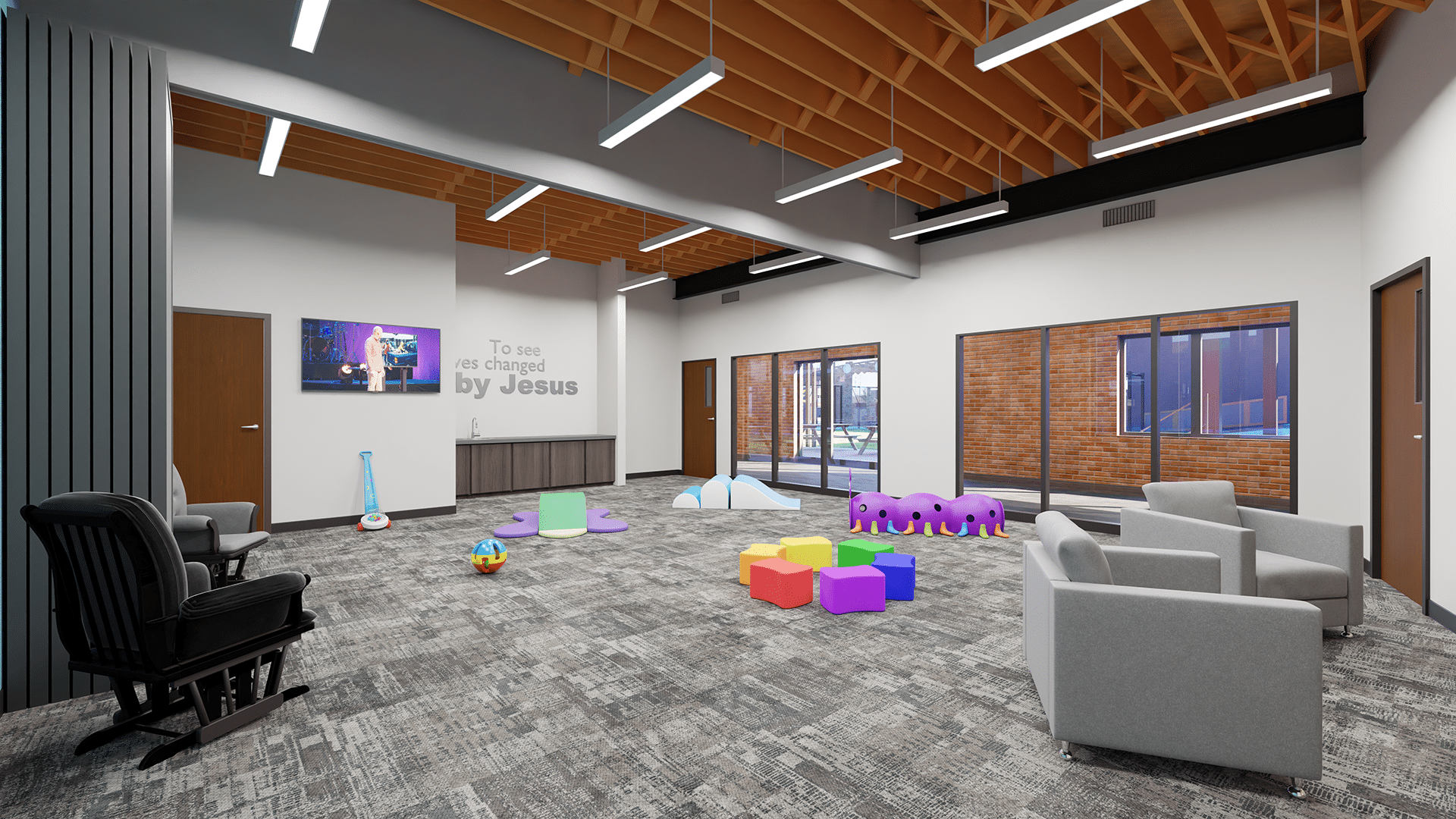
One of the first priorities I see churches address is their ability to serve young families with quality children’s areas. This isn’t just practical, it’s strategic.
Updated nurseries with secure check-in systems, age-appropriate classrooms, and welcoming environments send a clear message to your community: we are not a dying church. We’re investing in youth and vitality. We believe in our future, and we’re building for it.
This is where legacy givers play a profound role. When a 65-year-old member funds a children’s wing, they’re leaving a legacy. They’re saying to young families, “We believe in you. We’re building this for you. We want you here.”
That message resonates far beyond the congregation. It tells your entire community that this church is in it for the next 50 years.
Visual Tools That Bridge Generations
Both legacy givers and younger members want to see the vision, not just hear about it.
Legacy givers didn’t build their resources by writing checks blindly. They want clarity. When they can take a virtual tour of the proposed children’s wing—walking through the secure check-in area, seeing the nursery layout, understanding how the space facilitates ministry—their investment becomes tangible. They’re not funding an abstract concept; they’re building that room where lives will be changed.
Younger members have grown up in a visual culture and expect to experience something before they commit. Interactive 3D renderings and virtual tours meet them where they are.
An animated 3D virtual tour creates an immersive walkthrough experience of a renovation or new facility before a single shovel hits the ground. Congregation members can explore the spaces on their computers, tablets, or phones, making the future feel real and the vision feel achievable.
Animated Virtual Tour – Sample | 3Dream Studios: Helping You Share The Vision
Quality visual tools speak both languages simultaneously, becoming a bridge rather than a barrier between generations.
Developing Tomorrow’s Givers
While legacy members fund today’s vision, wise church leaders recognize that capital campaigns develop givers, not just collect gifts.
When younger families participate—even modestly—they’re exercising faith. They’re learning to trust God above and beyond their financial pressures, which are usually more intense when you’re younger with growing families and early-career incomes. This is where faith gets applied, where comfort zones get stretched, and where people watch God show up in their finances.
The 32-year-old couple who give sacrificially during this campaign, trusting God through the discomfort, become the 52-year-old legacy givers who can testify to the next generation: “We did this when we were your age. And God was faithful.”
That’s the mentoring cycle that builds healthy churches for generations.
Unity Through Faith and Vision
The most compelling capital campaigns don’t pit generations against each other. They cast vision that honors the past, serves the present, and builds for the future while keeping faith at the center.
When legacy givers see their investment creating spaces for young families to encounter God, they give with joy. When younger members see longtime pillars championing their needs and modeling trust in God, they lean in with faith of their own.
This is the complete body working together. It’s not about the building. It’s about putting facilities in place for effective ministry, helping people, changing stories, and learning together to trust God with everything we have.
That’s when a capital campaign stops being a fundraising effort and becomes a faith journey—one that positions your church not as a dying institution, but as a vibrant community building confidently for generations to come.
David Keesee is the founder and president of 3Dream Studios and has been helping churches successfully launch capital campaigns since 1995, www.3dreamstudios.com.