

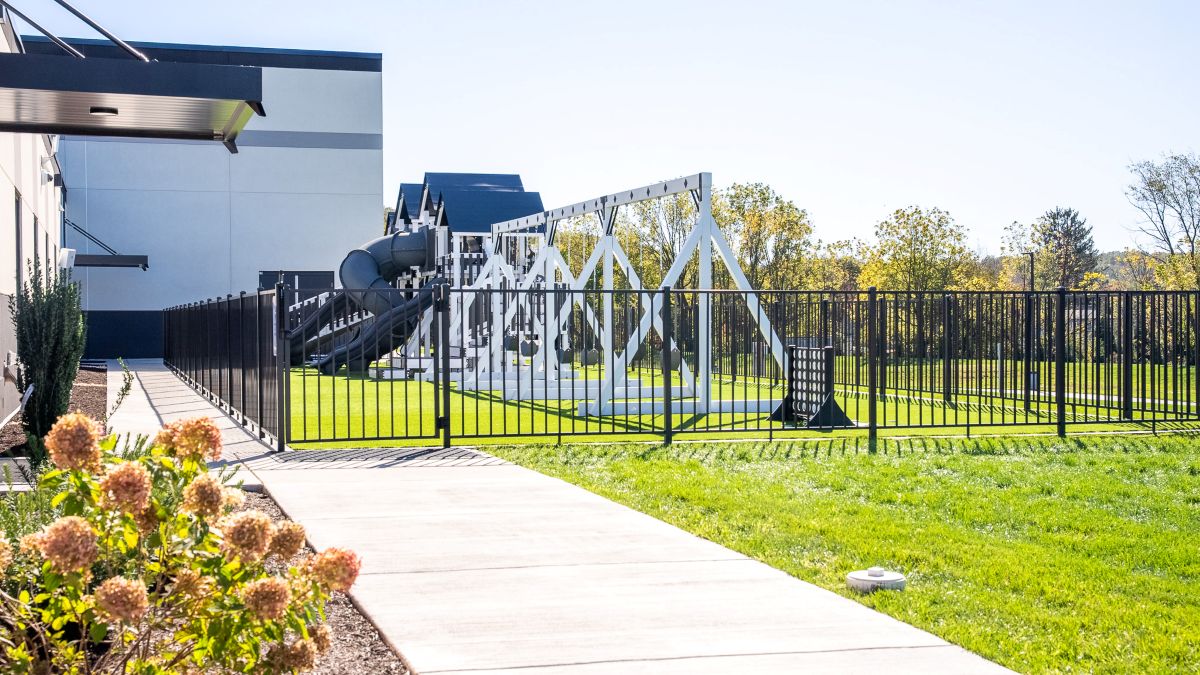
All across the country, communities of faith are reimagining how their physical spaces can reflect the joy, connection, and fellowship that are central to their mission.
Church recreation is more than a gym or multipurpose room; it’s about creating places that invite people to gather, laugh, and build relationships.
For children, play builds friendship and confidence. For adults, it provides opportunities to linger, talk, and connect.
From a playground outside the fellowship hall or a quiet courtyard where parents can connect while their children play nearby, recreational areas have become a natural extension of the church’s welcome.
Churches, synagogues, and temples of all sizes and denominations are increasingly investing in playgrounds and recreation areas on their campuses.
Trends in Church Recreation
Outdoor Play Areas – Ministries are transforming unused corners of their property into welcoming play zones. These spaces often serve both church members and neighborhood families, creating a natural bridge between the church and the community.
Inclusive Design – Accessibility matters. Many new playgrounds feature ground-level activities, ramps, and sensory play panels, enabling every child, regardless of ability, to participate safely.
Multi-Generational Gathering – Seating and shaded areas invite parents and grandparents to relax nearby, fostering conversation while children play. Churches are designing for connection across ages, not separation by age group.
Community Outreach – Recreation spaces double as platforms for outreach events, family picnics, pre-school, and Vacation Bible School. Open gates and friendly play areas send a clear message of welcome.
Benefits Beyond Play
A well-planned recreation area brings both practical and spiritual benefits.
After a morning service or Sunday school, children can move and explore. A playground offers a healthy outlet for their energy while parents and visitors linger nearby for conversation and connection.
Over time, these unstructured moments, such as sharing a cup of coffee while the kids play, help deepen relationships and foster a sense of community within the congregation.
Outdoor recreation also communicates value to young families. It says, “Your children matter here.”
And, when a church invests in places for families to play and grow together, it reflects its commitment to nurturing both faith and fellowship.
Planning Before You Build
Before beginning the process of exploring playground designs or contacting vendors, church boards and facility committees should consider several key topics. Recreation areas are fantastic additions when planned with foresight and alignment with the church’s broader mission.
Space & Layout – Is there level, visible ground close to the main entrances? Do children have to cross a road or a thoroughfare to reach it? Consider drainage, shade, and proximity to parking and gathering areas.
Safety & Supervision – Determine who will oversee the area and when it will be open. Will it be monitored while kids are playing? Clear expectations protect both children and the church.
Ordinances & Liability – Verify zoning laws, insurance requirements, and determine if ASTM standards apply to your site.
Maintenance & Security – Plan for regular inspections, surface upkeep, and lighting or fencing as needed.
Shared Use – If your property is rented to schools or community groups, establish written guidelines for access and care.
Choosing a Playground
Once your leadership team has agreed on priorities and budget, you can begin exploring specific playground solutions. The goal is to find the right one for how your congregation naturally comes together.
Space and Location – Start with accurate measurements and a clear understanding of how the area is used throughout the week. Consider traffic flow, drainage, and natural elements, such as trees or shade structures. Avoid spots that feel isolated or unsafe.
Number of Children – Estimate how many children are likely to use the playground at one time. This affects layout, equipment quantity, and the need for multiple play zones for different age groups.
Budget Holistically – Beyond equipment, include fencing, surfacing, lighting, benches, and security measures in your overall cost plan. A well-designed, low-maintenance setup will serve your ministry for years without frequent repairs.
Materials and Aesthetic Fit – Select materials that complement your church’s architecture and surroundings. Modern options, such as vinyl-sleeved wood or composite materials, offer excellent durability, weather resistance, and minimal maintenance. Coordinating color palettes and finishes with the church exterior helps the playground feel like a natural extension of the campus rather than an afterthought. Matching color palettes or finishes to the church exterior can make the playground feel intentional rather than an add-on.
Functionality – Determine what kind of play experience you want to create. Some churches prefer smaller, contained playhouses with a couple of swings, while others invest in multi-tower structures that accommodate larger groups and events. The key is to choose equipment that aligns with your space, budget, and congregation size.
Surfacing – Safe surfacing is essential. Options such as rubber mulch, poured-in-place surfacing, or turf ensure compliance with safety standards while enhancing the space’s appearance. Each material has different costs and maintenance needs, so consider both longevity and comfort, as well as price.
Spaces That Inspire Connection
As churches seek ways to engage families and strengthen their ministries, a playground can be more than just an addition to the property; it can be an invitation. To talk, laugh, and play. To turn outdoor moments into lasting relationships.
When faith communities create places for play, they’re not just building playgrounds. They’re building connections between generations, between neighbors, and between the church and the community it serves.
Janet Malin is chief marketing officer at King Swings, a family-owned manufacturer of handcrafted vinyl swing sets and playhouses that combine Amish craftsmanship with modern design, www.kingswingscommercial.com.