
Whether your place of worship is celebrating its sesquicentennial, its Silver Jubilee, or was built just a few years ago, wise church leaders are constantly planning for renovations and upgrades.
A well-planned church renovation offers benefits that impact the congregation, the broader community, and the building’s long-term vitality. By blending preservation of heritage with functional modernization, a renovation can strengthen faith, expand outreach, and create a more welcoming and inclusive space.
Renovation is more than just adding rooms or a fresh coat of paint; it acts as a catalyst for faith, unity, community, and shared purpose. It increases optimism and pride, demonstrates to members that they are valued, restores a sense of inclusion and belonging, and shows the broader community its commitment to improving its neighborhood and surroundings now and for generations to come.
Improved Outreach, Mission, and Community Involvement
A church renovation goes far beyond the sanctuary. By updating spaces, building new classrooms, expanding the kitchen, or upgrading the nursery/childcare area, renovated churches become a focal point for their neighborhood. They are better equipped to host community service programs, educational events, childcare programs, after-school programs, and food pantries, expanding their reach beyond Sunday worship.
Modern renovations can introduce more flexible, multipurpose spaces suitable for a wide range of activities, from youth group meetings and knitting clubs to awards banquets and wedding receptions.
By modernizing gathering spaces, such as foyers or welcome centers, and adding multipurpose rooms or a coffee café, a church can become a more inviting hub for community gatherings, celebrations, and after-school programs.
During the hottest summer or coldest winter months, renovated churches can offer spaces that serve as a respite from the heat or cold, especially for older citizens or the homeless. During severe storms, a facility with added modern amenities provides safety, security, and comfort.
Renovation Leads to Congregation
For those who have stopped attending services because they are too crowded, uncomfortable, dark, hot, or difficult to hear or understand each speaker or the choir, renovation can energize congregants and improve attendance among both young and old alike.
Some renovations may not be as apparent as the addition of a room. Energy-efficient modern lighting and upgraded heating, cooling, and lighting systems, along with energy-efficient alternatives, reduce operational costs and demonstrate responsible stewardship.
Modernized audio-visual systems enhance the clarity of sermons, while lighting systems—often used in liturgical dance, musical, or theatrical presentations—create a more engaging, immersive, and impactful service experience.
Inclusion for All Who Worship
There is a delicate balance between honoring the heritage of your house of worship and improving elements to maintain appearances.
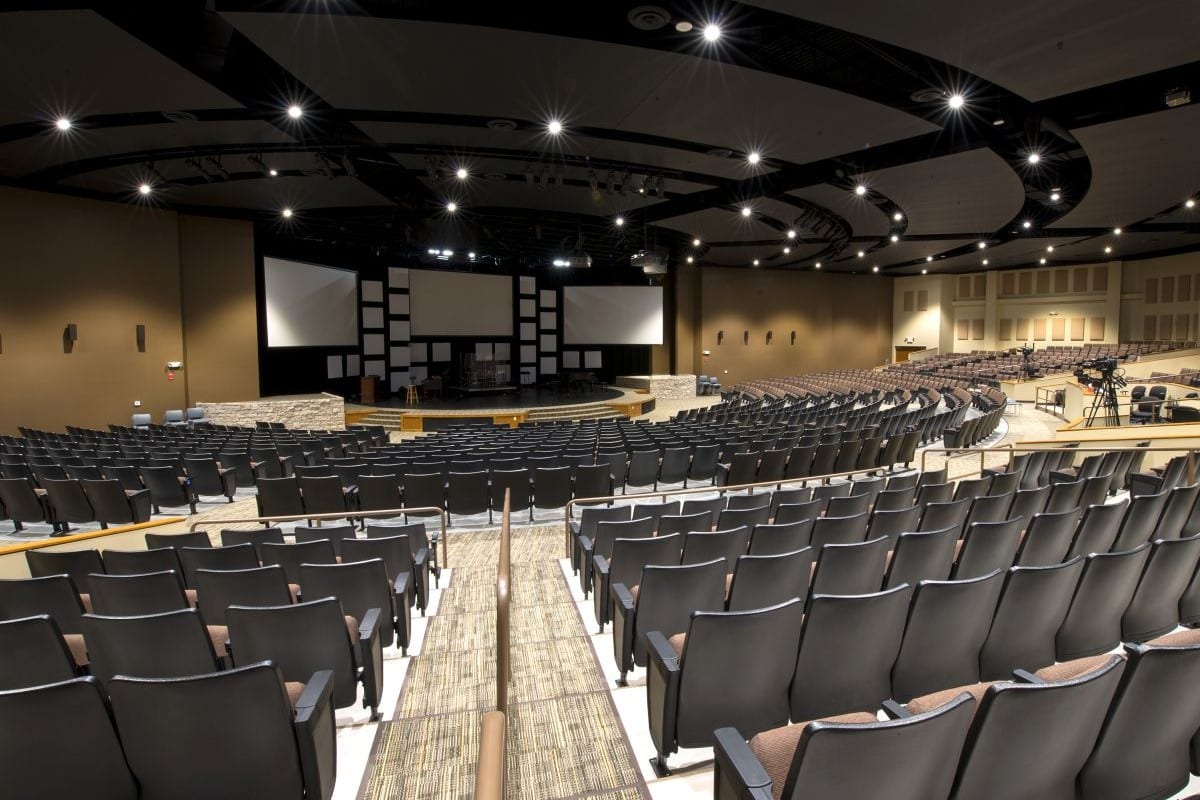
A significant renovation is upgrading hard, cramped pews. Sitting on a hard church pew for an hour can cause discomfort and several minor health effects, especially if the seat lacks cushioning or proper back support. This type of posture often leads to pressure on the sit bones (ischial tuberosities), reduced blood circulation, increased muscle fatigue, and stiffness in the lower back and buttocks. Over time, these effects may manifest as soreness, mild pain, and sometimes even numbness or tingling.
Upholstered individual seats that flip up improve access, while providing comfort, especially during longer presentations. Detachable arms offer individual seating for individuals with higher weights, and removable seats facilitate wheelchair access.
Upgrading sanctuary seating is also an ideal opportunity to widen the aisles for greater accessibility, as well as improve egress when entering or exiting (especially during an emergency). Best of all, improved seating can maintain the beauty of the sanctuary by using muted tones in the upholstery and the appearance of wood on arms and other elements.
To make worship more accessible for all, facilities have installed an assistive listening system designed to support congregants with hearing difficulties. The technology, often referred to as a hearing loop or FM system, delivers sound directly to hearing aids or special receivers, reducing background noise and making sermons, music, and prayers easier to understand.
Furthermore, during most building renovations, the Americans with Disabilities Act (ADA) requires that renovated areas and the paths of travel to those areas (such as the aisles in the sanctuary) be brought up to current accessibility standards. Renovations to primary function areas (such as lobbies, offices, or main public spaces) will trigger this requirement.
Additionally, accessible routes, restrooms, and drinking fountains serving those areas must also be made ADA-compliant, provided the cost does not exceed 20% of the total renovation budget. By complying with these requirements, churches strengthen the sense of community, ensuring that no one feels left out of the shared worship experience.
For the Facility’s Future
Renovations often address safety and structural issues, especially in older churches. Places of worship built during the horse-and-buggy era are now subject to traffic vibrations that can contribute to fatigue damage. In rare cases, vibrations may trigger cracking in walls, ceilings, or even foundations, especially if the soil beneath is loose or the building is older.
Shifting ground can have severe consequences for historic churches, due to their age, foundation type, and construction materials. Older structures often lack the reinforced foundations used in modern buildings, making them particularly vulnerable to ground movement, such as subsidence, settlement, erosion, or changes in groundwater levels. If the original stone or masonry foundation shifts, it may compromise structural integrity, resulting in visible tilting, foundation cracks, weakened floor supports, or misalignment of doors and windows.
The weight of a church bell can place significant structural stresses on both the steeple and roof of a church, especially if the bell is large and mounted high above the main structure. These stresses arise from both the dead load (constant weight) and dynamic loads (forces generated when the bell swings or rings).
As bells typically weigh hundreds to thousands of pounds, modern alternatives to traditional church bells include electronic bell systems and digital carillons. These solutions offer authentic bell sounds and musical options, often with programmable features, and alleviate the structural concerns, maintenance demands, and costs associated with cast bronze bells.
Safety Issues
In addition to addressing structural issues, numerous upgrades can be made to a church to address security, fire safety, emergency readiness, and safer everyday operations.
Some effective upgrades to make a church safer include installing surveillance cameras, improving door and window locks, implementing access control systems (such as keypads or security cards), adding motion-activated exterior lighting, and establishing fire alarm and suppression systems.
Securing windows with shatterproof glass or grills, designing clear evacuation routes, and regularly servicing electrical equipment also help prevent hazards.
(As an aside, churches should also conduct regular security audits, form safety committees, provide emergency training, and build strong relationships with local law enforcement and emergency responders.)
Heritage Meets Property Value
In historic churches, renovations can protect and restore historically significant architecture and artwork, keeping the cultural heritage alive for the entire neighborhood. It is possible to renovate or create new spaces without diminishing the beauty and history of an older building.
Furthermore, churches that own their property find that a renovation is a significant investment that can increase the building’s value and help secure its long-term financial stability.
A renovation can energize congregants. Undertaking a capital campaign for renovation brings congregants together by instilling a sense of purpose and a desire to reach the campaign goal, while also providing an opportunity to demonstrate their dedication to the facility, even long after they are gone.
Improving the House of the Lord
Matthew 18:20 “For where two or three are gathered together in my name, there am I in the midst of them.”
This verse assured believers that the presence of Christ is with them wherever they gather—in homes, fields, or outdoors.
However, a structurally sound, well-maintained and updated facility with high-quality amenities can help attract and retain new members, especially younger generations who may be seeking technologically advanced spaces. It can encourage those who stopped attending due to accessibility issues to return to in-person worship and fellowship.
A thoughtful renovation can ensure the facility continues to serve as a house of worship for generations to come.
This article is courtesy of Irwin, a family-owned leader in worship, PAC, education, cinema, concert and sports entertainment seating with 117 years of experience, coast-to-coast dealer support, and turnkey service from design to install, www.irwinseating.com.