


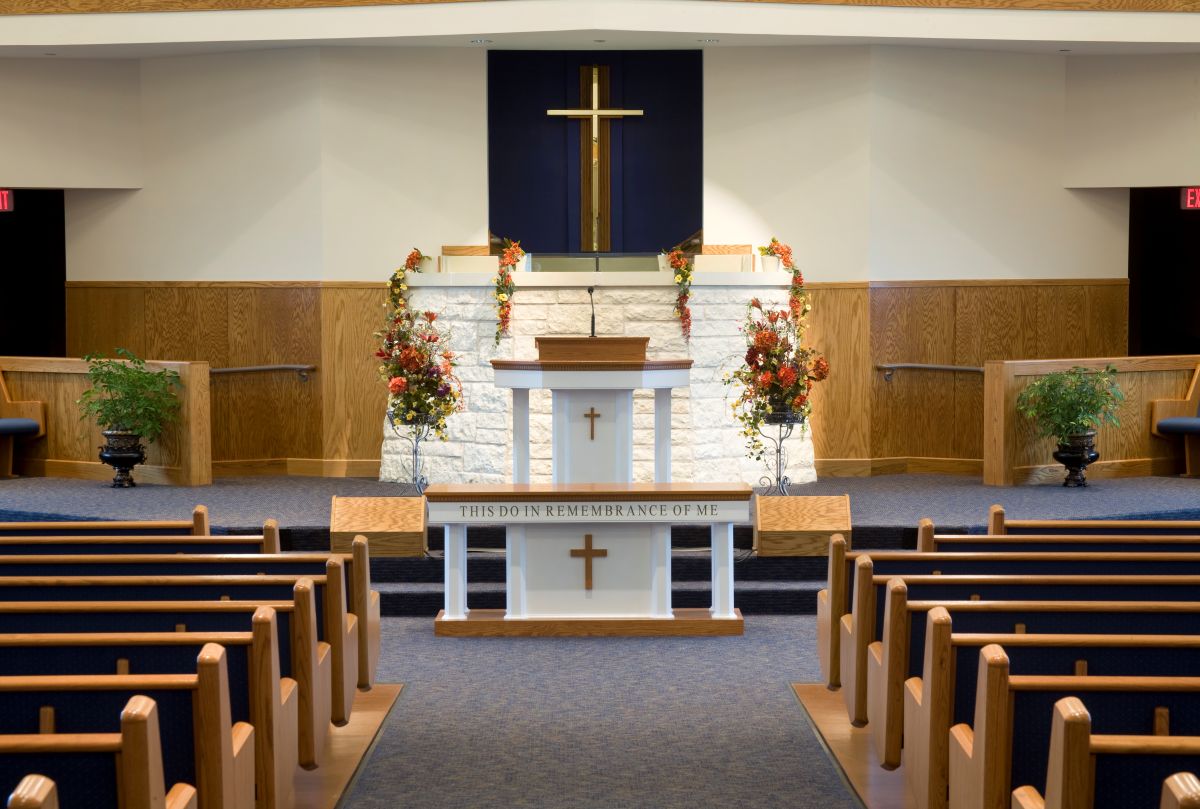
Standing prominently at the front of sanctuaries, pulpits have served as more than just furniture — they are platforms of proclamation, teaching, and spiritual leadership. For centuries, the pulpit has symbolized authority, truth, and connection between pastor and congregation.
Today, it remains a focal point for delivering the word of God, blending sacred tradition with modern design.
Origins and Early Development
The word pulpit derives from the Latin pulpitum, meaning a raised platform or stage. In ancient Rome, a pulpitum was used in theaters or public gatherings as a space from which an orator could address the crowd.
Early Christians, emerging within this Greco-Roman world, adopted similar structures for reading Scripture and preaching.
In the earliest Christian assemblies, people often congregated in their homes where there were no formal pulpits. Leaders read and expounded Scripture from a simple chair or standing place.
However, as Christianity became more established — especially after Emperor Constantine decriminalized Christianity in the 4th century — church buildings grew more elaborate.
The ambo emerged: a raised prominent platform, used for reading the Gospel and Epistles. Ambos, seen in early Catholic basilicas such as St. John Lateran and Santa Maria in Cosmedin in Rome, can be considered the pulpit’s ancestor.
By the Middle Ages, the ambo evolved into distinct pieces of furniture: the lectern, used for Scripture reading, and the pulpit, used specifically for preaching.
The pulpit became increasingly ornate, often elevated above the congregation to symbolize the authority of the Word of God being proclaimed from above.
Symbolism and Theological Meaning
The pulpit carries profound symbolism within Christian tradition. It represents the place where divine truth is declared and where the human voice becomes the vehicle for God’s Word.
The elevation of the pulpit is not merely a practical matter of visibility and acoustics — it also conveys spiritual hierarchy. The preacher speaks not as a mere lecturer, but as one entrusted with the sacred responsibility of interpreting and applying Scripture.
The design often incorporates religious motifs: crosses, carvings of the four Gospel writers, or inscriptions such as “Preach the Word” (2 Timothy 4:2).
In Protestant traditions that emphasize the preaching of Scripture as the heart of worship, the pulpit has often replaced the altar as the visual centerpiece of the sanctuary, underscoring the belief that faith is nourished by the hearing of the Word.
Pulpits in Contemporary Worship: A Legacy of Faith and Craftsmanship
In today’s churches, the pulpit continues to evolve. Some congregations still cherish traditional wooden pulpits as symbols of reverence. Others have replaced them with transparent lecterns or even removed them entirely, favoring a more conversational style of preaching that reflects egalitarian values.
The shift toward multimedia presentations and digital worship has also influenced the pulpit’s role. In many modern sanctuaries, the preacher may move freely across a stage, using screens and microphones to reach both in-person and online audiences.
Yet, even in these contexts, the pulpit — whether physical or symbolic — remains the focal point of proclamation.
Interestingly, the pulpit’s absence can itself be a statement. In some contemporary churches, the removal of a pulpit signifies an effort to break down perceived barriers between clergy and parishioners, fostering connection and participation.
From the stone ambos of early basilicas to today’s sleek acrylic, glass, and wood podiums, the pulpit has always served one sacred purpose: to elevate the Word of God.
Modern designs continue that tradition—crafted with care, precision, and purpose to fit every worship style and space.
Function Meets Faith
Today’s pulpits combine tradition with innovation. Built-in microphones, integrated screens, and adjustable heights support modern preaching styles, while movable bases and lightweight materials provide flexibility for contemporary worship. Each pulpit is thoughtfully designed to help pastors communicate with confidence, clarity, and connection.
The Centerpiece of Every Sanctuary
The church pulpit, in its many forms, remains a central emblem of Christian worship and community. It bridges the ancient and the modern, the sacred and the spoken, the divine and the human.
Whether your church is centuries old or newly planted, the pulpit remains the symbolic and visual centerpiece. It stands as a testament to faith, leadership, and community — a lasting investment in the worship experience.
Stephanie Basinger is the owner of Podium Stage, a company dedicated to selling high-quality podiums and pulpits for churches across the United States, www.podiumstage.com.