





![]() |
||||||||||||||||||||||||||||||||||||
|
Purchasing a Church Organ: Acoustical Considerations
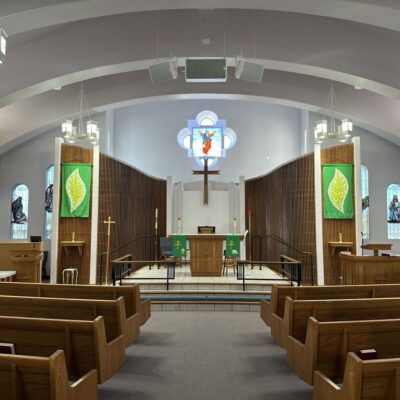
By: Jim Anderson A statement often made by knowledgeable organists and pipe organ builders is: "The acoustic is the No. 1 stop." Simply put, this means that no matter how good an organ may be, its success depends very much on the acoustic of the room in which it is installed. All too often churches purchase expensive, well-made organs (both pipe and electronic) only to be disappointed after installation due to an acoustic that fails to enhance church music. When the room acoustic is right, an organ of inferior tone quality can even sound acceptable, while an organ of outstanding tonal quality will sound absolutely thrilling. What Are Good Acoustics? Churches are often presented with totally opposing views on what is considered "good acoustics" by church music experts and P.A. experts. It is sometimes confusing for committees that are given the important task of making a set of decisions that will influence the success of music in the church for decades to come. The advice of those with knowledge and experience in the traditional church music field should always be taken seriously. While a "good" acoustic in a theatre is one thing, it is an entirely different matter in a church. The former is usually "dry" due to a great deal of sound-absorbent material on all surfaces within the room (no reverberation), while the latter will be a "live" room with more than two seconds of reverberation. A church with a high ceiling and all surfaces sound-reflective is by far the best for organ and choral music. Time and time again, it has been proven that both organ and choir music sound better in the right acoustic as it carries and blends the tone, making it more musical. Wall-to-wall carpet is one of the worst enemies of church music. It is not even necessary to carpet aisles with the aim of deadening the sounds of footsteps, as there is now available a great variety of excellent types of tile and other types of flooring that are not slippery when wet and are easy to keep clean. If there must be carpeting in a church, make it hard short twisted pile, with no underlay, and restrict the area where it will be installed as much as possible. Never put carpet in the organ or choir area, as this absorbs a large percentage of the sound before it gets a chance to travel anywhere. Without a reverberant acoustic, it is like trying to play a piano without any sustain pedal! It is dry and dull. A good architect, who is sensitive to providing a good acoustic for organ and choral music, can design a room that works well for both music and speech. In my experience, P.A. technicians will most often say that any echo needs to be removed with the addition of as much sound-absorbent material as possible. In this case, spending a lot of money to purchase a top-notch organ or piano, or putting a lot of effort into building a good choir, will always result in second-rate music. The shape of the room is best if it is rectangular, and the ceiling should be high. It is generally easier to project sound into a room with a high ceiling than in one that is low. Materials covering the walls, ceiling and floor should be reflective, but limiting the numbers of flags and banners also helps. The frequencies of organ stops cover the widest spectrum of any musical instrument, from 16 to 20,000 cycles, and the materials used on these surfaces play a very important role in governing the amount and rate of sound reflection or absorption. Artificial Sound Fields While many electronic organ companies rely heavily on digital reverberation systems to mask the actual tone quality of their instruments, there is no need for electronic reverberation in an organ that is placed in a good church acoustic. As good as electronic reverberation systems have become, they are usually of little use in church, and attempts to create artificial sound fields are almost never successful from the viewpoints of the choir and congregation. When an organ is used for practice at home, a good reverb system can enhance the sound to the point of making it a pleasure to play. This, again, is due to the usual dry acoustics of small carpeted rooms. Speaker Placement The room in which an organ is placed becomes an integral part of its sound system, much as the sound board of a piano is an integral part of that instrument. The organ builder is, in a way, only adding the strings and mechanism to the sound board. It is extremely important that not only the best possible acoustic environment be attained for the organ, but that the best possible placement of the organ's speaker system is found. So, in addition to choosing a suitable organ specification, no matter what size the instrument is, two further elements must be placed high on the list of prerequisites: The room must carry the sound of the organ well and the placement of the organ speakers must be favorable. All too often, electronic organ installers are not aware of the importance of this factor. The organ should ideally speak directly down the main axis of the building, and the speakers should be situated close to the singers, preferably behind and above their heads. Because most organs are installed in existing buildings, there are normally limitations placed on the ideal situations described above. For this reason, I recommend a serious consultation with an acoustician or at least an organist or organ builder with good knowledge and recognizable success in church work. This is a complex but important matter that, with the correct decisions, will be appreciated for generations to come. Jim Anderson is a partner in Phoenix Organs. Sidebar I wonder why it is that the noble pipe organ seems to be the one musical instrument that is under attack by cheap clones. Yes, there are the pianos made in foreign lands that look pretty but are an imitation of a good piano. There are mass-produced violins that are an inexpensive version of a fine violin. But, as a friend said to me recently, "Can you imagine any serious musician of any other instrument going on stage to play a concert on an instrument that is an artificial version, in part or in total, of the real instrument he or she normally plays?" Therefore, why is it okay for this to be happening to the organ? On the eastern front, the organ is under siege by those companies who make totally electronic versions of it. On the other western front, it is trying to fend off attackers who extract only part of its pipes and entrails and replace them with electronic supplements. All organists, lovers of organ music and organ sound appreciators seem to agree that there is no proper substitute for a pipe organ. But, because pipe organs are perceived as being so expensive, the reasoning goes that we must hope to find some alternatives that will give a similar result for considerably less money. Is it reasonable to expect that the cost of a pipe organ should be on par with other consumer goods? I remember purchasing my first new automobile in 1967 for about $2,000. If you apply an inflation factor of 7%, a new automobile that cost $2,000 35 years ago will cost about $21,353 today. Anyone with a calculator or computer spreadsheet program can do this projection. I occasionally watch sales activity on the first home I bought in 1969. I paid $13,000. Today it has a market value of about $140,000, comparable to the inflated price of the 1967 automobile. I remember three sizable organs that were installed in my city in the mid to late 1960s. They are comparable in size and the average price of the three at that time was about $90,000. Applying the 7% inflation factor, the price comes to about $961,000, directly in line with what it costs for an organ of the same size today. What is different about our era 35 years later that we are willing to pay $20,000 for an automobile, $35,000 for an SUV, $200,000 to $500,000 or more for a house, but a comparable pipe organ costing between $300,000 and $1 million is just too expensive, and therefore we must find ways to make it cheaper instead of continuing to make it better? For me, there is little doubt that the purchase of a pipe organ is a better investment. Those of us who build pipe organs and those of us who have been involved in helping churches, colleges or concert halls purchase a pipe organ know a truth: The amount of money actually raised almost always exceeds the project goal. I believe it is time that we reconsider the time-honored values of permanence, artistic integrity, longevity and, yes, affordability. Many can find ways to do something cheaper, but few have the opportunity to find ways to do something better and not cheaper. It is a myth that pipe organs are expensive to maintain. In the long term, they are less expensive to maintain, and they do not have to be replaced. Gene R. Bedient is president of Bedient Pipe Organ Company. Product Roundup Ahlborn-Galanti Organs Warren Pipe Organs Faucher Organ Company Quad Suite by Allen Organ Company Ruggles Pipe Organs Eminent HESCO, Inc. Bedient Pipe Organ Company Reuter Organ Company |
|
||||||||||||||||||||||||||||||||||
|
||||||||||||||||||||||||||||||||||||
|
For Christian School Products, Reviews And Resources Visit The Christian School Products Website |