





Hawthorn Hills Community Church
By: Frances Putman
Hawthorn Hills Community Church was a growing congregation, operating out of an old retail facility in Libertyville, Illinois. Located in Lake County, the church is in an area that has a population of more than 650,000 and was voted one of America’s “hottest towns” to live in by Money magazine.
A few years ago, the church secured 4.5 acres of property in a business park and was ready to begin the first phase of construction, which would include several multi-purpose areas.
“They wanted to start with the areas that provided benefit to the community,” said Joseph R. Kusinski, III, project manager with Krusinski Construction Company, the builder involved with the project.
In fact, the church often deems its building a “community center.”
In an area where 70 percent of the population is unchurched, Hawthorn Hills wanted to create a facility where individuals and families could come in a non-threatening environment to enjoy recreational activities. This was part of the plan for building membership. As people come in for basketball or volleyball games, they are invited to come back for church services, which are casual and contemporary. The church is focused on putting fun, excitement and creativity into the worship experience.
“It really stood out to me how much they were focused on making the church a family or community-type facility,” noted Krusinski.
In fact, the church was counting on the new facility to be a marketing tool for increasing membership. By building quickly, the church was able to increase donations and have more funding to pay for construction. Within the first few months the new building was open, Hawthorn Hills Community Church experienced a 50 percent growth in Sunday attendance, with the average service drawing more than 600 people. Its Easter Sunday attendance increased from 534 in 2002 to 1,586 in 2004.
Because the church needed to move quickly on completing the building, contractors had to work through the winter, which can be difficult in Illinois.
“We started at a bad time, but we had to get it done,” Krusinski said. “We did it, but it added costs to the project.”
The increased costs came for services like snow removal and propane tanks brought in to keep the concrete heated to the proper temperatures. Thermal blankets were used as well
to keep materials from freezing. Excavating through frozen ground presented a number of challenges. When holes were opened, they were refilled with stone rather than soil so that structural elements would set correctly in the frozen ground.
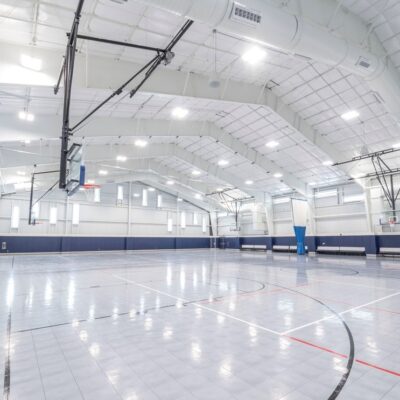
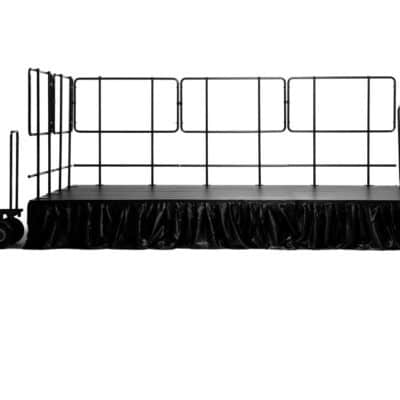
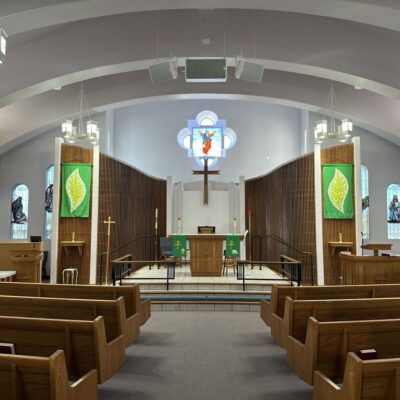
The first phase of construction included a 10,000-square-foot, regulation high-school-size gymnasium/auditorium/theater, which accommodates sports like basketball and volleyball through the week and concerts and church services on the weekend. Folding chairs are brought into the area and configured as needed for services and special events.
Acoustics always are a challenge in a combination gymnasium/theater, and it was a special challenge in this facility, since music and video are often used in services. Several methods were used to improve sound quality. First, the large, heavy curtains installed on the theater stage double as sound buffers in the spacious, open area. Inconspicuous sound panels were installed at intervals on the walls to improve acoustics as well. And, the roofing deck above the gymnasium/theater includes perforated flutes, which are insulated, also improving the sound quality and lessening the echo sounds often experienced in a gymnasium.
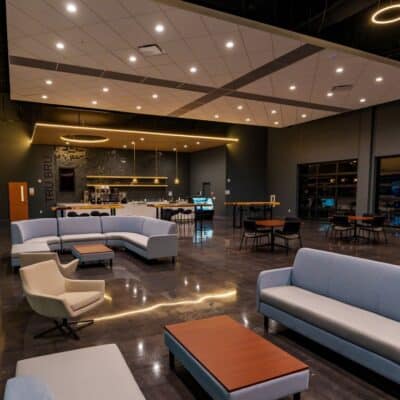
Because Hawthorn Hills Community Church has many families with young children, creating the right children’s area was important. Again, the idea was to create a multi-functional space. A large, open area can accommodate a big group gathering, or it can be partitioned with folding doors to fit smaller groups. Each space in the facility was designed to perform double, or even triple, duty. Large open spaces throughout the church can quickly be transformed into smaller areas for Bible studies or small-group activities.
A spacious daylight basement offers more space for growth in the future. Later plans are for larger gathering rooms and a banquet facility in the 22,000-square-foot area.
Finally, the church plans to build a separate sanctuary. The church has purchased 12 more acres adjacent to the existing location for future growth.
Because the church is located in a business park, it was important that its design fit into the surroundings. In this case, mostly commercial materials were chosen, like pre-cast concrete and steel. Commercial-type applications were used throughout the building process.
“This helped to save on costs,” noted Krusinski, “but it also raised the challenge.”
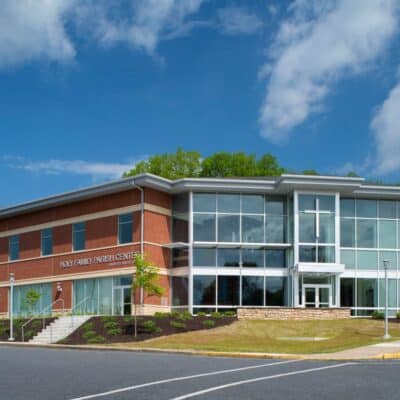
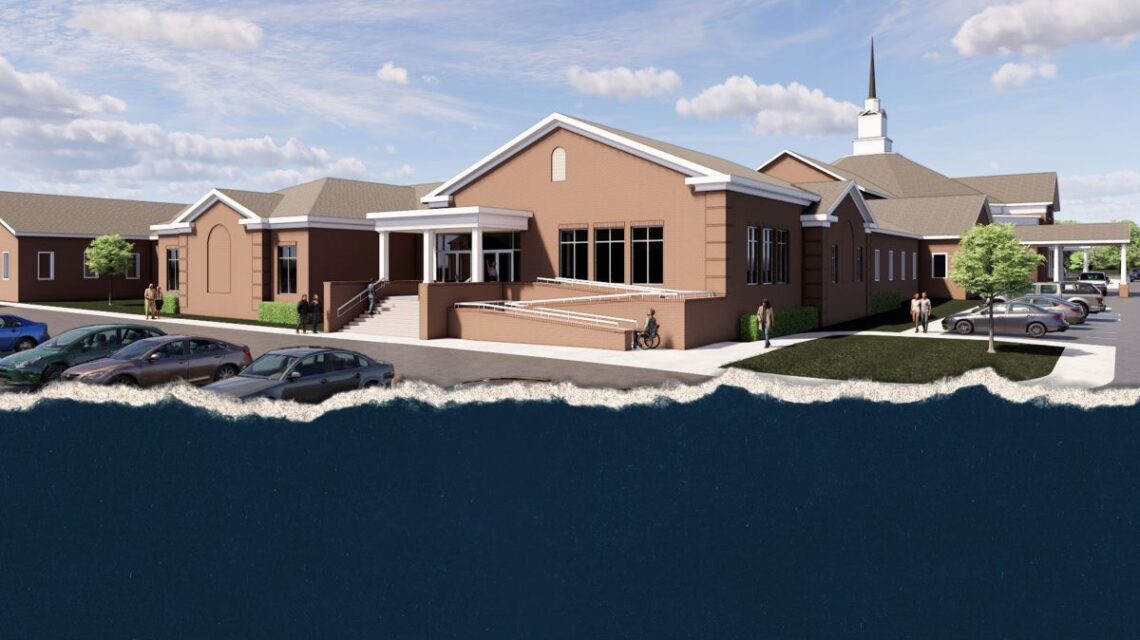
After all, the facility, somehow, needed to stand out as a church. A grand entrance, highlighted by large windows across the front of the building, gives the facility an open and inviting look, somewhat different from its industrial neighbors.
For other churches considering a similar building project, Krusinski recommends that leaders get a contractor on board early on in the project.
“A contractor can look at plans and help develop a true budget,” he said. “This is important for value engineering and can really help to reduce costs.”
Krusinski Construction Company, www.krusinski.com, is a design/build general contractor and professional manager of construction services. The company serves a wide range of corporate and developer clients, with specialty areas including new construction and renovation projects in the Chicago metropolitan and Midwest regional markets.
In a Nutshell
Church: Hawthorn Hills Community Church
Location: Libertyville, Illinois
Project: Build first phase of a multi-phase new-building project for this existing church
Size: 59,000 square feet
Cost: Just over $5 million
Construction Time: Nine months
Challenge: The timing was not ideal, as building continued through a cold Illinois winter, but the church needed the facility completed without substantial delays.
Solution: Builders “plowed right through,” so to speak, with frequent snow removal and propane tanks and thermal blankets brought in to keep materials, like concrete, warm and pliable. Holes dug into the ground were filled with stone, rather than earth, so new structural elements would set correctly in a frozen ground.