




![]() |
||||||||||||||||||||||||||||||||||||
|
Transcending the Ordinary
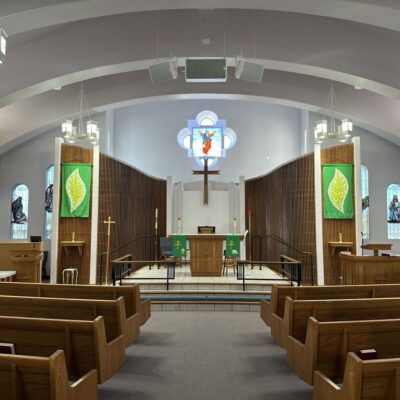
By: Patricia Zimmerman The transcendental beauty of stained glass windows has made them the preferred art form for enhancing the sanctuary and body of the worship space for a thousand years. With light as a metaphor for God, when stained glass is brought to life with sunlight, the presence of God is made visible. Throughout history, stained glass has provided the added benefit of serving as a visual Bible, to represent the stories of Christian faith through scenes and symbols. The origins of the craft are obscure, but it is apparent from existing historic buildings that by the Middle Ages, stained glass artisans were working throughout Europe and beyond. The fact that stained glass windows from the 12th and 13th century continue to draw legions of people each year to European cathedrals such as Augsberg and Chartres is a testament to the enduring quality and appeal of stained glass windows. Well-conceived, artistically executed stained glass is a vehicle for enabling people to transcend their daily lives. This level of accomplishment requires both excellent craftsmanship and a mystical quality provided by the stained glass through its meaning (or iconography), design and color. Bringing stained glass windows to fruition should be the result of an extensive process involving members of the church, possibly an architect, artists, researchers and craftspeople from the stained glass studio. Commissioning the Artwork Design The subsequent designs would depict the chosen themes in the preferred or recommended style. They would coordinate with the architecture, church interior and available light. The many other considerations include the purpose of the windows, orientation to the sun, size and location on the wall, and background views. The design should also indicate the type of glass and the color scheme. Color sketches, or "renderings," of the designs would convey a visualization of what the proposed artwork would look like. This initial design work would allow the establishment of a template for each window type. It would also provide enough visual information to begin work on a fundraising board and literature, if desired. After review and approval of a given design, a full-sized drawing of the window can be created. This "cartoon" becomes the pattern for the window, indicating all of the pieces and types of glass, where painting occurs, and leading specifications. Fabrication and Installation Guided by the cartoon and the selected glass palette, glaziers then cut the individual pieces of glass. Any planned glass treatments--such as painting, staining or etching--are applied to the cut glass. This is followed by firing to permanency in a 1200-degree kiln. Various colors of vitreous paint require separate firings, so projects incorporating painted glass can require triple the labor time of others. For most stained glass, a lead came matrix that binds the glass together forms the structure. This is built piece by piece and soldered on both sides. A water-proofing putty is "thumbed" under the lead on both sides of the panel to add support and weather resistance. Reinforcement bars are added to provide additional support for the window. In this and all aspects of the work, only the finest materials should be used for the best promise of longevity. When production is complete, the panels should be transported to the project site by studio staff. Being handled by trained craftspeople throughout every process, including transportation, protects the artwork. Comprehensive insurance should be in place for additional security. Upon reaching the project site, the new stained glass windows should be meticulously installed and should allow for small movements in the building. Planning Ahead With Stained Glass Frames Throughout history, the installation of stained glass often took place years after the construction of the building or in planned phases to manage the cost. A congregation may not even begin a stained glass campaign until years after the construction of a new facility. Whether it comes two or 20 years later, the success of installation is either helped or hindered by the amount of prior planning that has taken place. Today, integrated frames specifically designed to receive stained glass within a double or triple glazing can be a wonderful, energy-efficient option that can be installed at the time of construction and function indefinitely with only the clear, exterior layer of glazing installed. At whatever future point the stained glass campaign begins, its installation is less intrusive and more economical. When installing a stained glass frame at the time of construction is not opted for, the existing window frames and trim will largely determine how easily a stained glass installation will proceed. When stained glass is an unanticipated addition and protective glazing is desired, one of the biggest challenges becomes whether the framework will allow two glazings to be configured so that one can be accessed without disturbing the other. If the existing configuration requires that both are set from the exterior, for instance, then the exterior glazing must be removed each time one needs access to the stained glass. Another issue to consider for a stained glass retrofit is the existing finish trim—how wide it is and how many fasteners secure it into place. A wider trim that is flush with the edge of the sill will need to be trimmed after the stained glass is added. Thus, in the initial planning, it is wise to select a narrower trim that will not have to be either modified or replaced. Ease of removal is also important for the original trim. In most stained glass windows, more than one panel comprises the overall window, and these are supported by horizontal T-bars that attach into the window frame. In the stained glass specific frames, T-bars are integrated and require no retrofitting. Otherwise, T-bars must be custom installed for a less seamless connection to the frame. Both T-bars and the flat bars that are attached to each individual panel for its support require notching into the frame for a flush fit. Thus, if the original trim is deep enough to be notched for the support bars, the results will be sounder and more aesthetically pleasing. Taking a proactive approach to a future with stained glass is a win-win situation for all involved. The result of selecting frames and trim that best accommodate art glass contributes greatly to achieving an installation that is economical, efficient and aesthetically successful. Stained glass as an enhancement to the worship space involves a significant investment of time and reflection, which, in itself, is a rewarding process. The further result of the energy that goes into the planning, development and execution of such a project is stained Patricia Zimmerman is a project manager for Conrad Schmitt Studios, www.conradschmitt.com, of New Berlin, Wisconsin. Conrad Schmitt Studios has been active in the creation and conservation of stained and etched glass for religious and civic buildings for more than a century. |
|
||||||||||||||||||||||||||||||||||
|
||||||||||||||||||||||||||||||||||||
|
For Christian School Products, Reviews And Resources Visit The Christian School Products Website |