



![]() |
||||||||||||||||||||||||||||||||||||
|
Church Flooring Basics
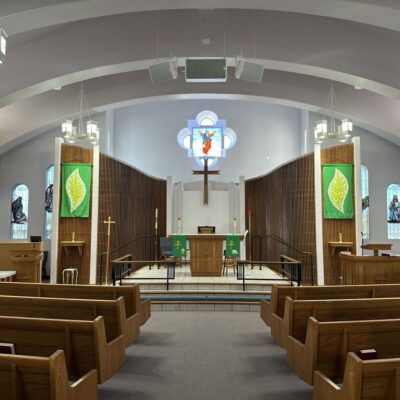
By: Fredrick Taggart Technological advances in the chemical world have dramatically changed the flooring options that are available, and trying to discern what is best for your church is never easy. There are many factors to consider when choosing the best product for your application. The type of floor you use should first be dictated by where you are talking about putting it. Because there are so many possibilities, I want to stay focused on the sanctuary area of the church complex. There are four main areas in a church: the altar/platform area, the aisles, the entry way, and the area under the seating. Let’s handle each area separately. Altar/Platform Area As you move away from the liturgical setting, the flooring is either hardwood or carpet. Usually the easy answer as to which you use is based on how much choir and musical instruments are located in this area. The more there is, the more you should be looking at the hard surfaces to help with sound reflection. If there isn’t much, then it is usually not as necessary to install the hard surface and carpet is usually selected. While wood flooring and carpeting can vary drastically in price based on many factors, carpeting is usually the least expensive route. Aisles Any hard surface will help to reflect sound. This may be a good thing if the room is a little “dead” acoustically. It will also reflect the sound of people and their heels as they “click” down the aisle. Hard surfaces are not necessarily easier to clean. At first glance, you may think so, but many require scrubbing or grinding periodically. Usually, the material that is used to do regular cleaning is wet and not the best thing to slop up against wood pews if you have them. Soft surfaces can deaden the space more. You have to decide if that is preferable. Selection of the carpet’s color, pattern, and texture can be a difficult thing for a church to build a consensus on and is usually best left to design professional with extensive church design experience. The material that these mats sit on is largely up to the church with one exception. In areas of the country where there is a lot of sand, carpet is not recommended. This is because the sand will work its way down to the base of the carpet and, over time, start to cut the fibers of the carpet as people walk on it. The best vacuums have great difficulty removing sand from the base and never do a totally thorough job. Under the Seating First, cleaning under pews is almost impossible, and, if you have kneelers, it is even worse. You simply cannot get in and around all of the legs very well. Frequently, dirty rings are left around the legs. The water that is used on the floor gets soaked up by the pew legs and has either started to create splits at the base of them or the finish’s adhesion to the wood is starting to fail. Carpeting solves the cleaning problem and more. Finally, remember that carpet is a sound absorber. The shuffling of the feet and the dropping of the books or kneelers are not the sounds you want to reflect. Carpet under the seating has almost no effect on the spoken word, the music, or the congregants singing. Warranties on flooring can also be drastically different. From carpet that is guaranteed for life not to stain or delaminate to concrete that will never wear out, finding the right fit for your church is a complicated decision. For more answers to your questions, be sure to contact an experienced church designer with lots of experience in understanding the full range of issues when selecting flooring for your church. Fredrick Taggart is president of Fredrick & Emily's, a provider of church renovation services since 1976, www.fredrickandemilys.com. |
|
||||||||||||||||||||||||||||||||||
|
||||||||||||||||||||||||||||||||||||
|
For Christian School Products, Reviews And Resources Visit The Christian School Products Website |