




![]() |
||||||||||||||||||||||||||||||||||||
|
First Things First
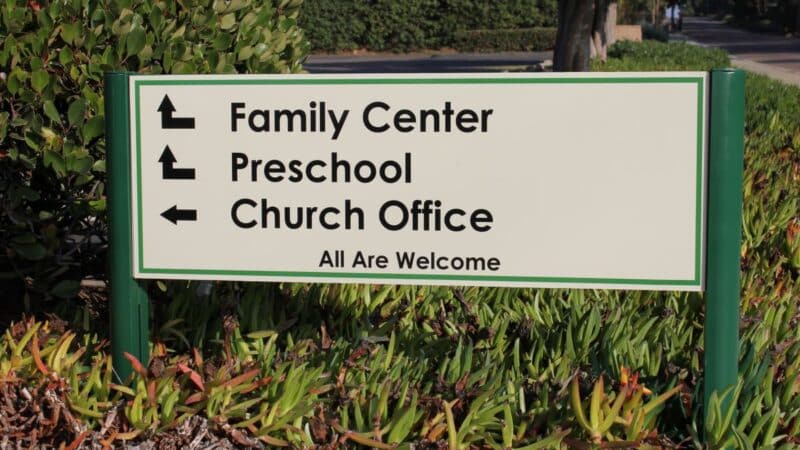
By: Lyle E. Schaller For most of the history of Christianity in what is now the United States of America, congregations sought to implement a ministry plan that fit into one of a variety of categories. Here are a dozen examples. 1. We welcome and serve recent immigrants from that same community in western Europe from whence our people had come earlier. 2. We place a high priority on transmitting our expression of the Christian faith to our children and seek to retain their allegiance as they grow older. 3. We represent our branch of the Christian faith in this community and seek to reach and attract the unchurched who live within a mile or two or three of our meeting place. 4. The time has come to improve and expand our meeting place to enable us to accommodate a larger number of younger people. 5. We must relocate our meeting place as we follow our members who are moving to newer housing. 6. We place a high priority on allocating most of our discretionary financial resources to our denominational agencies to help them fund their ministries. 7. We are guided by that widely propagated assumption that, as the decades roll by, Protestant congregations tend to peak in size in their evangelistic efforts, but eventually the members grow older and fewer in number, creating a need to merge with another congregation. 8. We place a high priority on allocating some of the resources, including people and dollars, to the planting of new missions in communities where our denominational heritage is not represented. 9. Currently, our major focus is to find and attract our next pastor who will be an ideal "match" for our departing minister, who turned out to be a serious mismatch and/or a "hard act to follow." 10. We are funding a newly created staff position, and we seek the right person to fill that vacancy as part of a larger strategy, to reach and serve people we no longer appear able to attract. 11. We define the word "church" as a reference to real estate, and our top priority is to design and adopt a plan to renovate and/or expand our current meeting place and raise the money required to implement that plan. 12. If we are closely related to a specific denomination, we are now focused on a highly divisive issue that is polarizing our people. We enjoy participating in internal quarreling! Each faction is committed to identifying a common enemy and organizing to defeat that enemy! What Were the Reference Points? A New Challenge The Impact of Radical Change Another change adds a second qualification in that search to fill a vacancy. Today, the demand not only is for a higher level of competence, but also for a good "match" between the gifts, skills, experience, and potential tenure of the candidate and the precisely defined ministry plan of that congregation for the 21st century. One explanation is a product of several changes. The competition among Christian churches in the United States for future constituents is at an all-time high! A related change is that the expectations Americans born after 1960 bring to church are greater in terms of quality, relevance, and choice than of older generations. That also helps to explain the increase in the number of adults born into, baptized, and confirmed in a Roman Catholic parish who have switched their allegiance to a large nondenominational Protestant congregation. Add in the general erosion of inherited institutional loyalties, plus the financial costs of meeting those high expectations, and that helps to explain the sharp increase in the number of Protestant congregations averaging 800 or more at weekend worship. Perhaps the most widely ignored change can be illustrated by comparing three Protestant congregations. One is the typical small town church averaging 125 at worship in the 1960s that now averages 140 at worship. The second is the new suburban mission founded in the 1950s that averaged 150 at worship in 1965 and now averages 175. The third is the suburban congregation founded after 1970 that now averages more than 800 at weekend worship. One huge difference today among these three congregations is that in 1960 the pastor of that small town congregation may have brought more gifts and skills to the assignment of initiating, winning the necessary support for, and the implementation of major changes in a voluntary association than were brought by any lay volunteer. In the second congregation, the pastor may have had one or two lay volunteers with equal or greater skill in that assignment. By 1980, that third congregation may have included seven to 10 lay volunteers with a higher level of training, experience, and competence than the pastor possessed as an agent of intentional change. Today, the number of skilled and experienced agents of change in those three congregations may be five in the first congregation, 10 in the second, and at least 50 in the third. Five Forks-in-the-Road Second, if the hope is the power of denominational loyalties will bring in a steady stream of newcomers affiliated with your denomination and who are moving to your community, pray that next year will resemble 1959. Third, replace the sign in front of your church that declares, "We Welcome Everyone!" with a slogan that (a) describes your specialty in ministry and (b) is based on what sometimes is described as "Need Based Evangelism." One example is, "We’re here to help you rear your young children." Another is directed at engaged couples and newlyweds, "We’re here to help you build a healthy, happy, and enduring marriage." A third is, "We specialize in helping you meet and make new friends." (The key ingredient in fulfilling that promise often is a variety of trips that are designed to be meaningful and memorable experiences.) The fourth in these crucial forks-in-the-road grows out of two trends. One is the past six decades of the ecumenical movement have emphasized the value of interchurch cooperation. The second was identified earlier. In our contemporary consumer-driven culture, the competition among Christian congregations in America for future constituents is at an all-time high! Finally, a fifth fork-in-the-road is the number of Americans who prefer to help pioneer the new exceeds the number who want to perpetuate the past by at least a two-to-one margin. Examples include music, communication via projected visual imagery rather than the spoken or printed word (the three-screen culture of TV, computers, and cell phones is replacing books, magazines, newspapers, and the landline telephone), replacing those long wooden pews with more comfortable chairs, and adding a paved parking lot rather than rely on parishioners walking to church and/or on-street parking. What Is the Question? 1. Has the time come to replace our current pastor? 2. How can we expand our off-street parking? 3. Should we renovate our aging and functionally obsolete physical plant or should we relocate our meeting place and provide modern facilities in a larger site at a better location? 4. Should we hire someone to staff our evangelistic outreach ministries? 5. Should we add at least one new worship experience to our weekend schedule? 6. Should we consider merging with another congregation? 7. Who are the people who are being ignored by other churches in our community whom we could reach, attract, serve, assimilate, nurture, and challenge? 8. Has our definition of our No. 1 natural constituency changed and we need to describe and affirm our strengths and resources before we redefine our No. 1 constituency? 9. Let’s pretend we were about to plant a new mission, with the meeting place at this site, designed to reach, attract, and serve the unchurched. The first step would be to identify that potential constituency. The second would be to design the package of ministries required to reach that constituency. That would enable us to make informed decisions on the third step of means-to-an-end concerns, such as staffing, real estate, schedules, money, and our public image. 10. What is a specific, attainable, and measurable goal for our average worship attendance seven years from now if we do agree that the Lord is calling us to strengthen our evangelistic outreach? 11. What will be the tradeoffs if we do design, adopt, and implement a strategy to reach people who currently do not have an active church relationship? 12. Who are the people and why might they oppose our strategy? What can and should we do early in the process to reduce or offset potential opposition? It is worth noting that the first six of these questions focus on inputs into the system, while the last six focus on potential outcomes. Which questions should be a top priority in your congregation? Lyle E. Schaller is a retired parish pastor and parish consultant. Copyright 2009 by Lyle E. Schaller |
|
||||||||||||||||||||||||||||||||||
|
||||||||||||||||||||||||||||||||||||
|
For Christian School Products, Reviews And Resources Visit The Christian School Products Website |