



![]() |
||||||||||||||||||||||||||||||||||||
|
How to Obtain a Modular Facility Identical to a Site-Constructed Facility
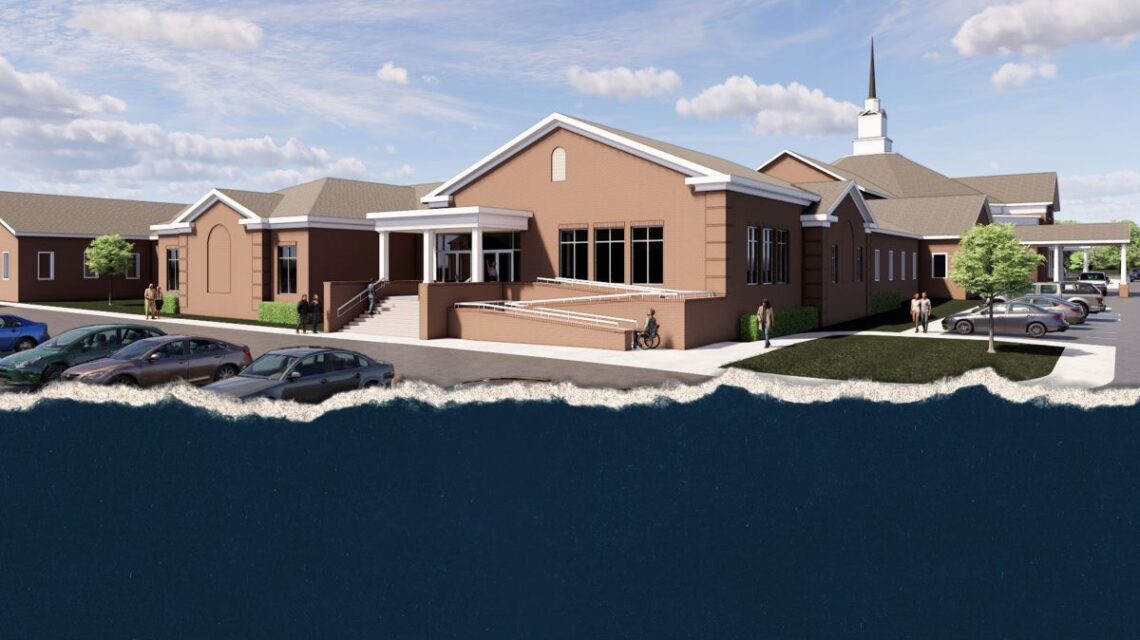
By: Mike Morton If you are an or owner of a permanent factory-built church facility that didn't possess the same quality and life cycle you anticipated, then it's time to identify the pitfalls that may have gotten you there. In the following few paragraphs, you will learn how to get the results that you wanted in the first place. In other words, don't stop reading now. When outlining your specifications and selecting your modular builder, you must look for certain key elements. If done correctly, you can obtain a facility that is identical in every respect to a traditional site-constructed facility for less money and less time. But first, you must arm yourself with the necessary knowledge to make the right decision. If you feel you haven't made the best choice in the past, don't worry; you probably didn't know these essentials, and that's why you ended up with something that fell short of your expectations. That's all about to change. Concrete Floors The plain truth of the matter is that the floor system in your facility is the single most important element in achieving the same quality and life cycle as other methods of construction. Few realize that concrete floors are inexpensive and are readily available anywhere. There are many modular companies that provide concrete floors. If your modular builder doesn't, go see another. Avoid “Industry Standard” To achieve an identical site-constructed facility with the same performance, the materials must be the same. These include block or brick exteriors, 10-20 year roof warranties, the highest energy efficient mechanical and electrical systems, grade one heavy-duty fixtures and equipment, and the list goes on. Same Look & Feel To verify that this requirement can and will be met by the builder you choose, you simply need to visit a similar project completed by your builder. While you're making the inspection, you should ask the building users about maintenance, energy consumption, and overall performance. From the modular builder's perspective, you have successfully passed this test when a visitor asks where the modular building is and you respond, "You're standing in it." Steel Construction Fire ratings, termite resistance, strength of materials, lesser insurance costs, and increased appraisal value are a few of the many benefits steel construction has to offer. If you want to be part of the majority that has constructed a modular facility identical to a site-constructed facility, have it steel-constructed. A modular builder that engages in building construction identical to site construction will offer steel construction as a standard; and if not, it will be offered at a modest increase in cost. Avoid Huge Cost Savings The building should cost about the same, when compared to site construction, and will differ slightly depending on the builder's buying power, efficiency, and technical innovation. When one considers the entire project, however, the modular builder will provide you savings through an accelerated construction timeline borne of the simultaneous construction activity that occurs off-site and on-site. Since the overall construction timeframe is shorter than that of site construction (by about half) the costs for interim construction financing, insurance, supervision, security, temporary utilities, equipment and labor allocations, temporary office space, and a host of other costs related to a construction jobsite, including principal and interest on the land, are significantly reduced. Additionally, the occupancy, or opening date, will usually occur in about half the time, allowing the user to begin a speedy return on the investment. Minimal disruption to the ongoing operation of the user and adjacent businesses also translates into cost savings. These are the user's real savings when a modular method of construction is utilized to achieve the quality of a site-constructed facility. Single Responsibility In design-bid-build, the owner commissions an architect to prepare plans and specifications. These are then used in a competitive bid process to select a contractor. In most cases, it is the lowest bidding contractor that will be selected, and not necessarily the best contractor for the job. The difference between this method of project delivery and design-build is that by utilizing design-build, one entity executes both the architecture and construction. This method is also known as "design-construct" or "single responsibility." Employing a design-build firm accelerates the construction timeline even more by minimizing "middle-man" miscommunication and eliminating costly change orders. This is because in a design-build contract, the design-builder is required to guarantee error free plans. Mistakes are therefore resolved by the design-builder on his nickel and incentive exists to resolve mistakes immediately to lessen the cost. In contrast to these advantages, the contractor in a design-bid-build scenario looks for mistakes to generate change orders and no incentive exists for timely corrective action. If you have a choice between these two delivery systems, selecting design-build will guarantee the objective of an identical facility to site-construction and will do it on time and on budget. You’ve Got the Tools When purchasing your next church building, don't sacrifice quality when opting for a factory-built method of construction. In fact, you should make the most of the amazing time and cost savings available through this dynamic new technology. For a modular facility that looks like a site-constructed facility, find a turn-key manufacturer near you. |
|
||||||||||||||||||||||||||||||||||
|
||||||||||||||||||||||||||||||||||||
|
For Christian School Products, Reviews And Resources Visit The Christian School Products Website |